
Space discoveries sometimes arrive in the most unexpected way. In this case, the story did not begin with a spacecraft landing on Mars or a rover drilling into red soil. Instead, it began on Earth — with a dark, ordinary-looking rock that had fallen from the sky.
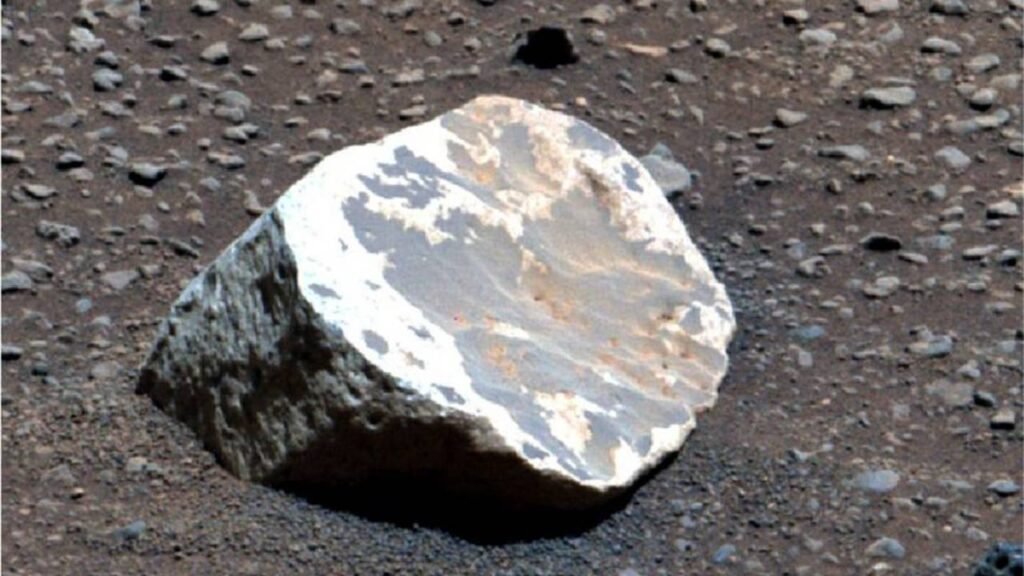
Scientists later confirmed that the meteorite had actually come from Mars billions of years ago. After years of careful study, a new detailed scan of the rock has revealed something extraordinary: clear traces of water locked inside its minerals.
This finding matters far beyond geology. Water is the single most important ingredient scientists search for when studying other planets. Wherever water once existed, the possibility of life becomes stronger. The Martian meteorite, known as “Black Beauty,” is now helping researchers reconstruct what Mars looked like when the solar system was young. Rather than being the frozen desert we see today, Mars may once have been a much wetter and more active world.
Table of Contents
Martian Meteorite Water Discovery
The Martian meteorite water discovery is based on advanced scanning methods that allowed scientists to study the rock without breaking it apart. Researchers used neutron and X-ray imaging to detect hydrogen inside the stone. Hydrogen is a key indicator because it is one of the basic components of water. The scans revealed water-bearing minerals spread throughout the meteorite, showing that the rock interacted with liquid water long before it was blasted off Mars and traveled to Earth.
Rock From Mars Reveals Traces of Water
| Key Detail | Information |
|---|---|
| Meteorite Name | Black Beauty (NWA 7034) |
| Origin | Mars |
| Estimated Age | About 4.4 billion years |
| Discovery Location | Found on Earth after impact |
| Detection Method | Neutron and X-ray scanning |
| Main Finding | Water trapped inside minerals |
| Water Content | Approx. 0.6% of the rock’s mass |
| Scientific Importance | Evidence of early water activity on Mars |
| Implication | Mars may have once been habitable |
What Scientists Actually Discovered
The detailed scans showed that the meteorite contains hydrogen-rich minerals. These minerals typically form when rock interacts with liquid water. That means the water was not simply ice frozen onto the surface — it was chemically bound inside the rock itself.
Earlier studies had suggested Mars once had water, but the new scanning techniques allowed researchers to map exactly where the hydrogen was located inside the meteorite. Instead of a few isolated traces, the water-related minerals were distributed across large portions of the rock. Scientists estimate that around 0.6 percent of the meteorite’s mass comes from water-bearing compounds.
This discovery is important because it confirms that water was present on Mars during a very early period in the planet’s history.
Evidence Mars Once Had Liquid Water
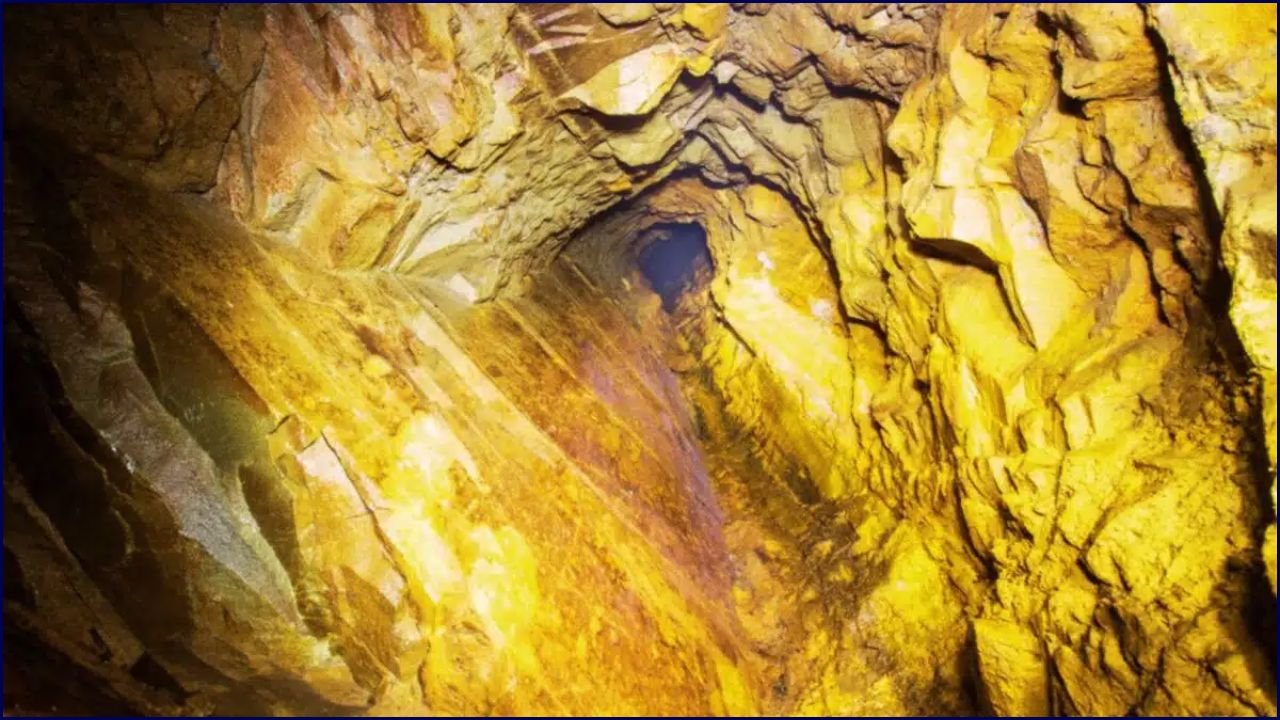
The minerals found in the meteorite are known as iron oxy-hydroxides. These minerals form when rocks come into contact with liquid water, often at moderate temperatures. Their presence suggests Mars once had active geological processes involving water — not just frozen ice.
Scientists believe that early Mars may have had groundwater systems, shallow pools, or even long-lasting wet environments beneath its surface. The water could have circulated through the crust, altering rocks and leaving chemical signatures that remained preserved for billions of years.
In other words, Mars was likely not always a barren and dusty world. At some point in its past, it may have supported rivers, warm subsurface water, and possibly stable environments suitable for microbial life.
The Rock Is Incredibly Ancient
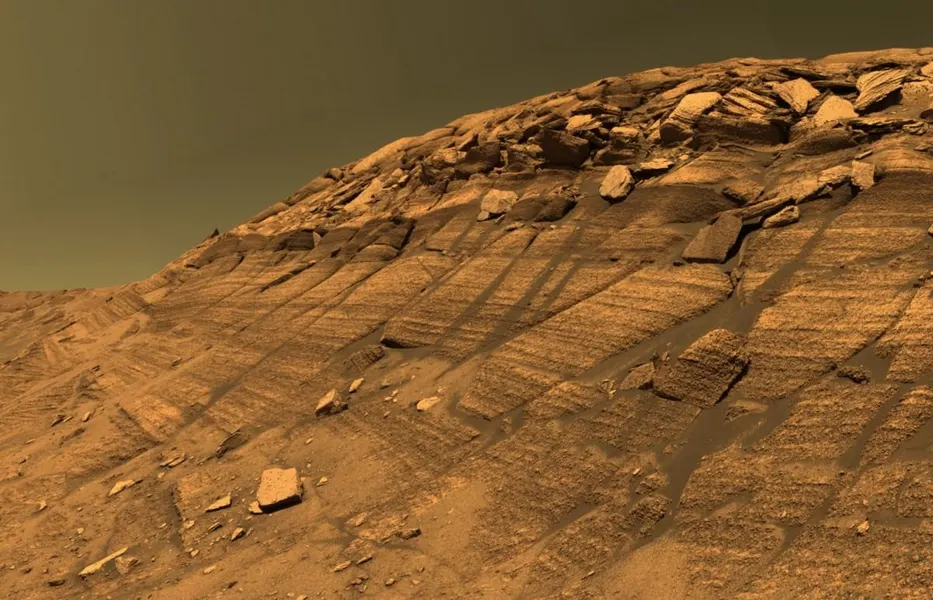
One of the most remarkable aspects of the meteorite is its age. Researchers estimate it formed about 4.4 billion years ago, making it one of the oldest known pieces of Mars ever recovered.
This time period dates back to the early solar system — an era when planets were still forming. On Earth, oceans were just beginning to appear. The meteorite suggests that Mars also had water very early in its history, possibly at the same time Earth was becoming habitable.
The rock itself likely formed in the Martian crust. A massive impact later blasted it into space, where it traveled for millions of years before eventually landing on Earth.
It Helps Future Mars Missions
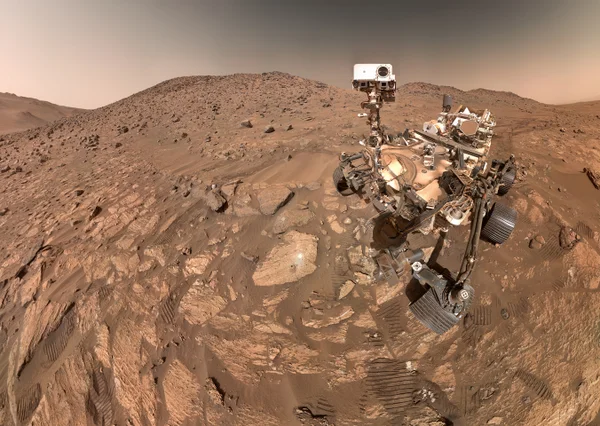
Beyond its scientific curiosity, the meteorite serves as a preview of what future Mars sample-return missions may uncover. The scanning technology used on the rock allows scientists to study valuable samples without damaging them. This is crucial because samples returned from Mars will be extremely rare and precious.
By practicing on this meteorite, researchers are refining the techniques they will use when Mars rocks are brought back to Earth. It also helps them decide which types of rocks should be prioritized during exploration missions.
In many ways, nature has already conducted a sample-return mission for us — Mars itself launched the rock into space, and Earth simply collected it.
Could This Mean Life Existed on Mars?
The discovery does not prove life existed on Mars, but it strengthens the possibility. Scientists generally look for three basic requirements when considering habitability:
- Liquid water
- A source of energy
- Organic chemistry
Mars has already shown evidence of organic molecules in rover samples and signs of past groundwater activity. The meteorite now adds another important piece — confirmation that water was present very early in the planet’s history.
If microbial life ever formed on Mars, it would most likely have appeared during this ancient wet period.
Why the Discovery Matters
This finding changes how scientists view Mars. Previously, some researchers believed Mars may have had only short wet periods. The meteorite suggests something different: water may have existed on Mars almost from the beginning of the planet’s formation.
That means early Mars might have been closer to early Earth than we once imagined. A warmer climate, underground water circulation, and chemical reactions in rocks could have created environments capable of supporting simple life forms.
The importance goes beyond Mars alone. Understanding Mars helps scientists learn how planets evolve and how common habitable worlds might be in the universe.
The Big Takeaway
The Martian meteorite is more than just a rock. It is a preserved record of a planet’s past. Locked inside its minerals is evidence that Mars once interacted with liquid water billions of years ago. The detailed scanning techniques revealed this history without damaging the sample, opening new possibilities for studying extraterrestrial materials.
While the discovery does not confirm life on Mars, it significantly strengthens the case that the planet was once habitable. Early Mars may have had the conditions necessary for life long before Earth became the thriving world we know today.
As scientists prepare for future missions and sample returns, rocks like Black Beauty provide a valuable guide. They show that answers about life beyond Earth may not only come from distant spacecraft — sometimes they arrive quietly, falling from the sky and waiting patiently for humans to look closely enough.