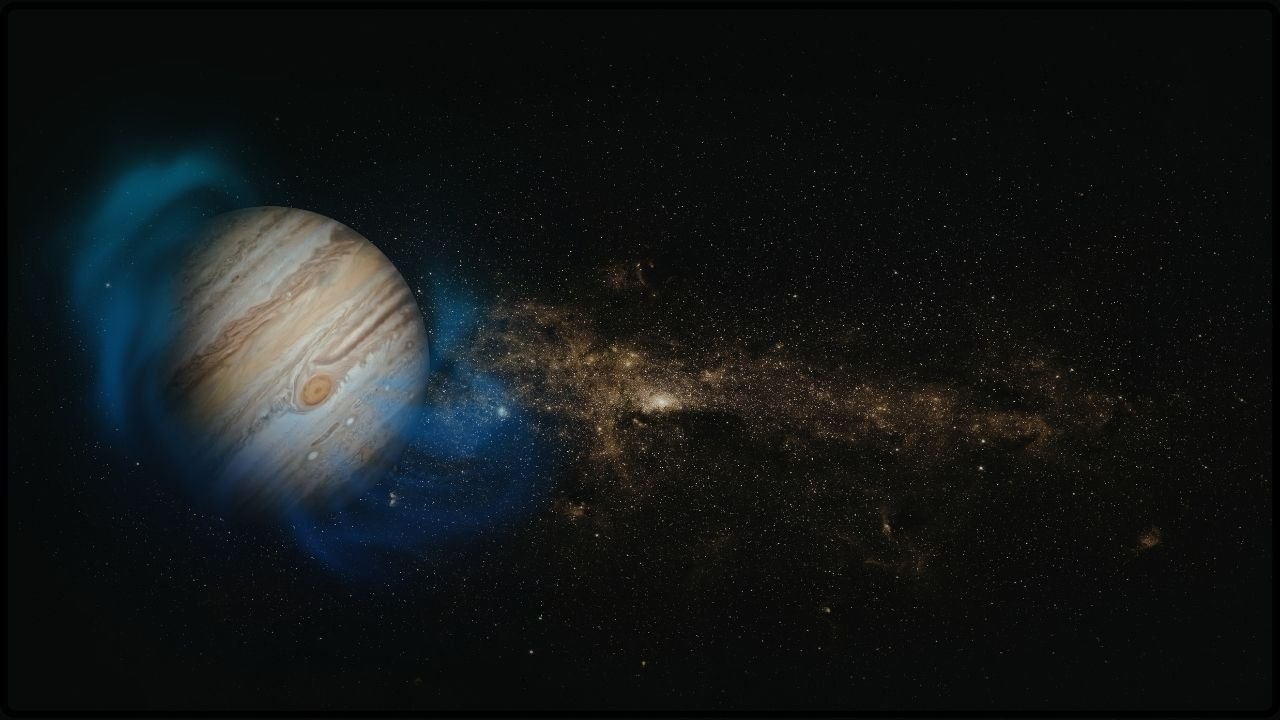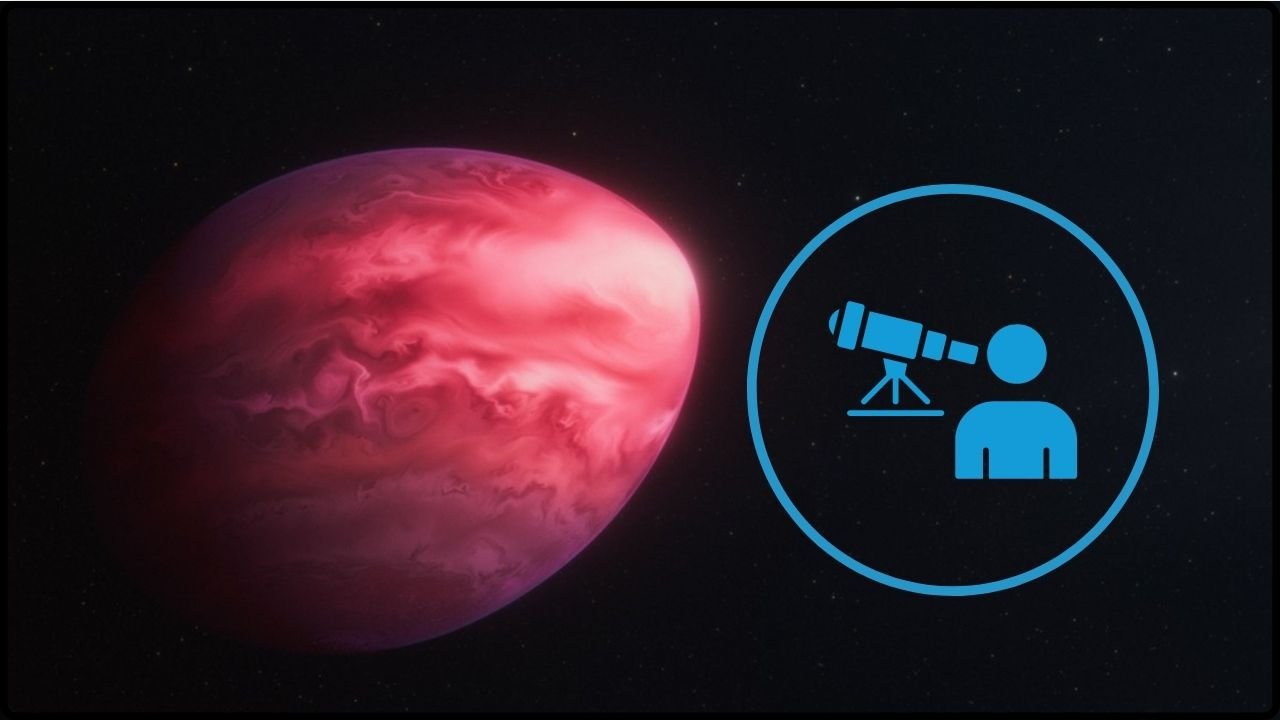

Astronomers have identified a previously unseen rogue world about the size of Saturn drifting alone through the Milky Way, a finding tied to the mysterious Saturn-Sized Planet located in the so-called Einstein Desert. The object lies roughly 10,000 light-years from Earth and was detected using gravitational microlensing, a technique based on Albert Einstein’s theory of relativity. Scientists say the discovery provides rare direct evidence that planets can be violently expelled from their original star systems.
Table of Contents
Saturn-Sized Planet Hidden in the “Einstein Desert”
| Key Fact | Detail |
|---|---|
| Object Type | Free-floating (rogue) planet |
| Mass | Comparable to Saturn |
| Distance | ~10,000 light-years |
| Detection Method | Gravitational microlensing |
Astronomers expect similar discoveries as more powerful telescopes come online. Each detection helps explain how planets form and migrate. Researchers say the growing data suggests a dynamic galaxy where planetary systems frequently rearrange themselves, leaving many worlds to wander alone across interstellar space.
The Einstein Desert Discovery Explained
The Saturn-Sized Planet was detected in a part of observational data astronomers have long described as the “Einstein Desert.” The name does not refer to a location in space but rather a missing population of celestial objects.
For decades, surveys repeatedly found either large Jupiter-like planets or brown dwarfs — small failed stars — but rarely anything in the intermediate mass range. The absence created a major theoretical inconsistency between computer simulations and observations.
“This object sits squarely in a category we expected to exist but struggled to observe,” astronomers reported in their observational analysis. “It confirms that nature produces these planets even if they are extremely difficult to detect.”
The discovery occurred when the planet passed in front of a distant background star. For a short time, the star appeared brighter. That temporary flash revealed the hidden world.
Historical Context: Why Scientists Were Searching
Astronomers have searched for rogue planets for nearly three decades. The first strong candidates appeared in the 1990s when advanced detectors became sensitive enough to measure tiny changes in starlight.
Planet formation models predicted that young solar systems should be unstable early in their lives. Giant planets, forming rapidly in swirling disks of gas, often interact gravitationally. Computer simulations showed that some planets should be flung outward entirely.
However, observational evidence remained limited.
Until recently, most confirmed rogue planets were small — closer in mass to Earth or Neptune. Finding a Saturn-Sized Planet demonstrates that even large gas giants can be ejected into interstellar space.
How Einstein’s Theory Made the Detection Possible
Gravitational Microlensing
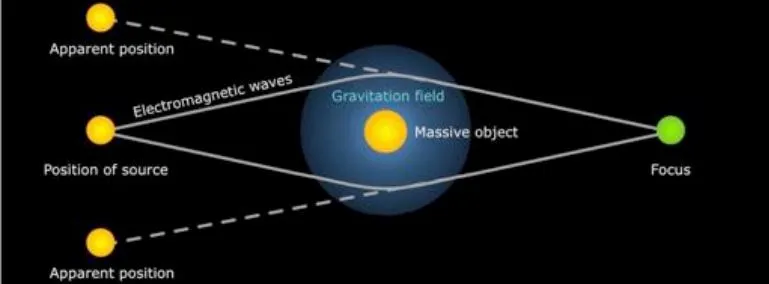
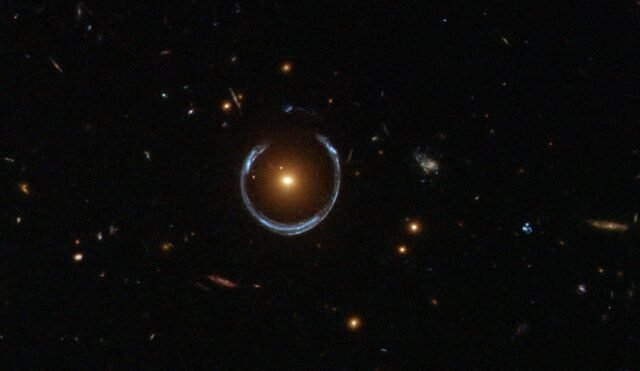
Gravitational microlensing occurs when a massive object crosses the line of sight between Earth and a background star. Gravity bends light, acting like a cosmic magnifying glass.
The concept comes from Albert Einstein’s general theory of relativity, published in 1915. Einstein himself predicted the effect but doubted it would ever be observed because the alignments required are extremely rare.
Modern telescopes have now proven otherwise.
Researchers combined ground observatories with data from the European Space Agency’s Gaia spacecraft. Observing from multiple locations allowed them to calculate the object’s mass directly — something almost never achieved for a planet without a host star.
The brightening event lasted only days, yet the measurements provided distance, velocity, and size estimates.
Why Rogue Planets Matter
The discovery of a Saturn-Sized Planet strengthens the idea that many planets in the galaxy wander alone.
Violent Planetary Histories
Planetary systems form inside rotating clouds of gas and dust surrounding young stars. During the first few million years, gravitational interactions are common and chaotic.
Large planets can scatter each other. A close encounter may either send a planet toward its star or eject it entirely.
Astronomers believe the early Solar System experienced similar turbulence. Evidence from orbital simulations suggests Jupiter may have migrated inward and then outward billions of years ago, altering the positions of other planets.
Earth survived because its orbit stabilized. Many other systems may not have been so fortunate.
Could Rogue Planets Be Habitable?
Although rogue planets lack sunlight, scientists do not completely dismiss habitability.
Gas giants often have moons. If a moon retained internal heating from radioactive elements or tidal forces, liquid water could exist beneath ice.
Some researchers also propose that thick hydrogen atmospheres could trap heat, keeping surface temperatures above freezing even in darkness.
Astrobiologists note this scenario is speculative but scientifically plausible.
Filling a Missing Cosmic Population
The Einstein Desert mystery may now be partially solved. Astronomical models predicted many mid-mass objects, yet telescope surveys rarely detected them.
The new Saturn-Sized Planet confirms they exist but are hidden because detection depends on rare alignment events.
Microlensing requires three objects to align precisely:
- Earth
- The rogue planet
- A distant background star
Such alignments may occur only once for each planet in millions of years from Earth’s perspective.
Scientific Implications
Revising Planet Formation Models
The discovery suggests planetary systems commonly eject large planets. That implies our Solar System may be unusually stable.
Impacts on Exoplanet Research
Traditional detection methods depend on stars. Rogue planets emit almost no visible light, so they remained invisible until microlensing surveys matured.
Astronomers now suspect the Milky Way may contain billions of free-floating planets.
Comparison With Our Solar System
To understand the scale, Saturn is about nine times Earth’s radius and composed mainly of hydrogen and helium. It formed roughly 4.5 billion years ago and plays a stabilizing role in our planetary system.
If Saturn had been ejected early, the inner planets might have experienced catastrophic orbital shifts. Earth’s climate stability might never have developed.
This comparison helps scientists understand why studying rogue planets informs planetary habitability research.
Future Missions and Observations
The upcoming Nancy Grace Roman Space Telescope, scheduled for launch later this decade, will conduct continuous microlensing surveys of the Milky Way’s dense star fields.
NASA scientists expect it to detect thousands of rogue planets, including Earth-mass worlds.
Large ground telescopes such as the Vera C. Rubin Observatory in Chile will also monitor millions of stars nightly, dramatically increasing detection rates.
Astronomers anticipate that within 20 years, rogue planets may become a major field of study comparable to traditional exoplanet astronomy.
Broader Cosmic Implications
The discovery forces scientists to rethink the galaxy’s structure. Stars may not be the most common gravitational centers after all.
Some models now suggest the number of rogue planets could rival the number of stars in the Milky Way, estimated at 100–400 billion.
That possibility changes the search for life, planetary formation theories, and even galactic evolution models.
FAQs About Saturn-Sized Planet Hidden in the “Einstein Desert”
What is the Einstein Desert?
A range of planetary masses where astronomers rarely detected objects despite theoretical predictions.
What is a rogue planet?
A planet not orbiting a star, traveling independently through interstellar space.
How was the Saturn-Sized Planet detected?
Through gravitational microlensing — the bending of light from a distant star by the planet’s gravity.
Can rogue planets support life?
Possibly on subsurface oceans of moons or under thick atmospheres, though evidence remains theoretical.