
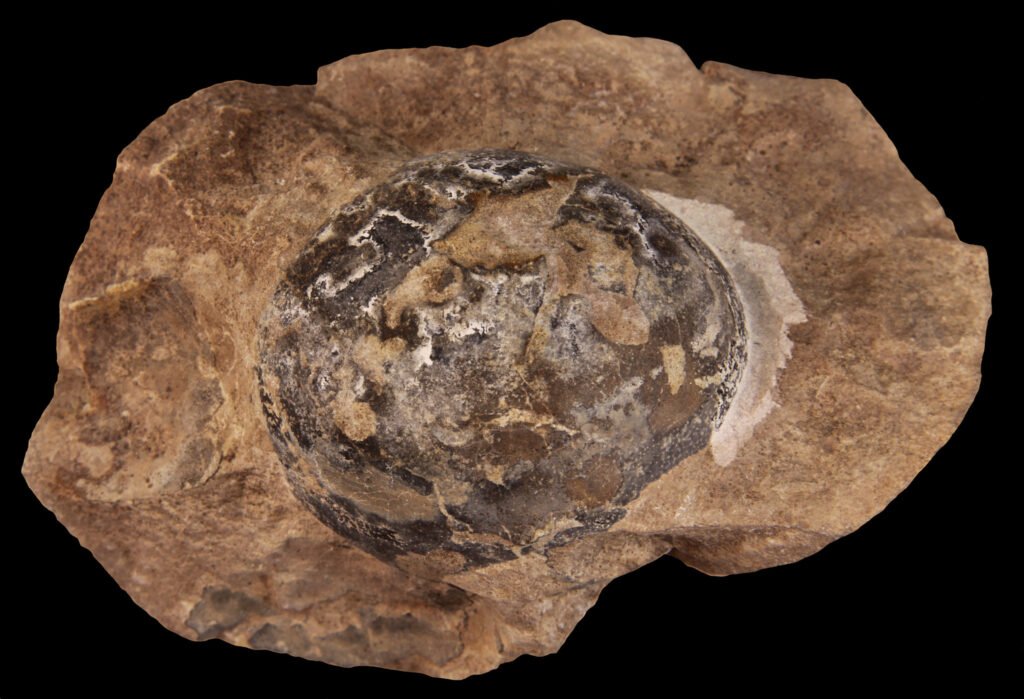
Scientists have developed a new dating technique using Dinosaur Eggshell Fragments, allowing researchers to determine the age of dinosaur fossils directly rather than estimating from surrounding rocks. The method analyzes trace radioactive elements trapped in fossilized shells and could significantly improve the accuracy of prehistoric timelines, evolutionary studies, and climate reconstruction during the Late Cretaceous period.
Table of Contents
Dinosaur Eggshell Fragments to Improve Fossil Dating Methods
| Key Fact | Detail / Statistic |
|---|---|
| Dating method | Uranium-lead isotopes inside eggshell calcite |
| Accuracy | Roughly within 5% of volcanic-ash dating |
| Typical age measured | About 80–90 million years |
| Scientific impact | Direct dating of fossils instead of surrounding rock |
Researchers are now examining nesting sites worldwide to refine the method. If results continue to align with geological measurements, scientists say prehistoric timelines could become more precise than at any point in the history of paleontology.
What Scientists Discovered
The research focuses on fossilized eggshell material found at nesting grounds across multiple continents. The shells contain calcite crystals that formed while the dinosaur egg was developing inside the animal’s body.
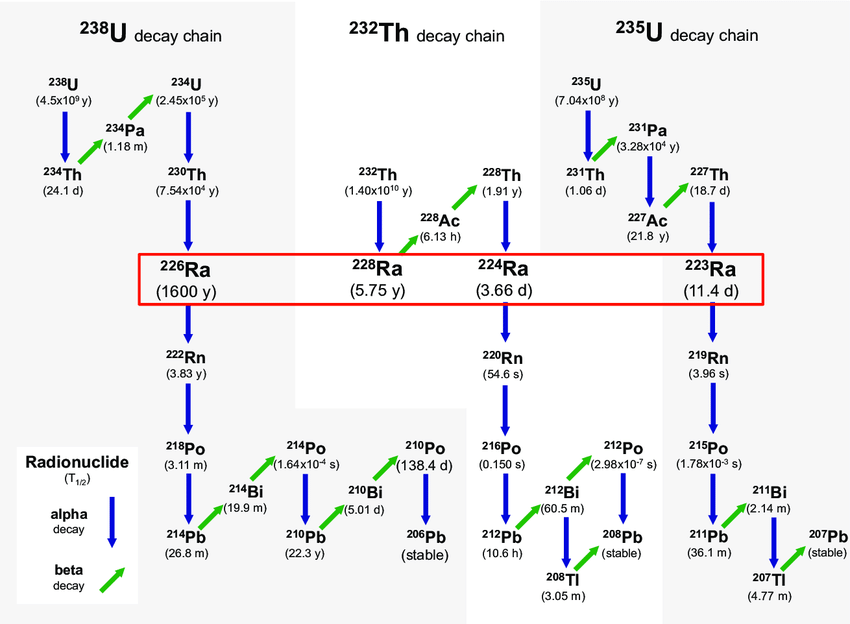
When buried in sediment, these crystals incorporated small amounts of uranium atoms. Over millions of years, uranium decayed into lead at a constant and measurable rate — the foundation of radiometric dating.
“This effectively timestamps the moment the egg was laid,” explained a geochemist involved in the study. “We are measuring an event in the animal’s life, not just geological activity nearby.”
Scientists analyze the fragments using a laser-ablation mass spectrometer. The laser removes microscopic particles, and a detector measures isotope ratios. The procedure causes minimal visible damage and preserves museum specimens.
The technique represents a rare example of directly dating biological behavior in extinct animals — specifically nesting.
Why Traditional Fossil Dating Was Limited
Reliance on Rock Layers (radiometric dating)
For decades, paleontologists relied on volcanic ash layers or nearby minerals such as zircon crystals to determine fossil age. Those methods are reliable but indirect.
A fossil found between two dated layers was assumed to fall somewhere between them. However, geological movement can shift sediments after burial.
Floods, erosion, and tectonic pressure sometimes move fossils into younger or older deposits. This process, called reworking, creates uncertainty in paleontology research.
A field paleontologist described the challenge:
“Sometimes you find a skeleton in sandstone that formed long after the animal died. The rock tells you when the sediment settled, not when the dinosaur lived.”
In regions lacking volcanic ash — including large desert basins — scientists often had no precise dating method at all.
Why Eggshells Are Uniquely Useful
Biological Time Markers (Cretaceous climate)
Eggshells fossilize rapidly compared to bone. Their mineral structure is stable and resists chemical alteration.
Bone is porous and interacts with groundwater, often replacing original minerals. Eggshell calcite, by contrast, preserves its chemical signature.
Because eggshells form shortly before nesting, their isotopic composition reflects a specific moment in time — the reproductive season.
Researchers say this also allows study of Cretaceous climate patterns. Chemical variations in shells can reveal environmental conditions such as temperature and humidity during nesting.
By dating multiple nests across regions, scientists can track migration patterns and seasonal behavior.
Historical Context: A Long-Standing Paleontology Problem
Since the 19th century, dating dinosaurs has depended on geology rather than biology. Early paleontologists like Othniel Charles Marsh and Edward Drinker Cope could identify species but could not precisely determine when they lived relative to each other.
Later, geochronology improved using radioactive minerals, yet fossils themselves remained difficult to date.
This limitation affected debates such as:
- whether certain predators hunted specific herbivores
- how fast dinosaur groups evolved
- how quickly species disappeared before the mass extinction
The new approach may finally resolve these long-standing scientific questions.
Implications for Dinosaur Research
Rewriting Timelines (paleontology research)
Accurate ages help determine coexistence between species. For example, two dinosaurs discovered in nearby regions may actually have lived millions of years apart.
Researchers can now:
- reconstruct food chains
- determine migration routes
- identify breeding colonies
- analyze population changes
A paleobiologist noted:
“We might discover entire ecosystems that never actually existed together. Dating uncertainty blurred the picture for decades.”
This could change textbooks, museum displays, and educational materials.
Climate and Earth History Insights
Geologists are particularly interested in linking fossil records to climate cycles.
The Late Cretaceous was a greenhouse period with high sea levels and warm temperatures. Precise fossil dating allows comparison between species and environmental changes such as warming spikes or volcanic episodes.
Researchers can now ask:
- Did dinosaurs migrate during heat waves?
- Did nesting occur in seasonal climates?
- Were extinctions gradual before the asteroid impact?
Such connections help scientists understand how animals respond to climate change — knowledge relevant to modern ecosystems.
Scientific Verification
To verify accuracy, researchers compared eggshell dates with volcanic ash samples from the same sites. The results closely matched.
Independent laboratories repeated measurements and produced similar values, strengthening confidence in the technique.
A geochronology specialist said:
“The consistency between laboratories suggests the method is reproducible, which is essential in science.”
Scientists caution, however, that the method requires well-preserved shells. Poorly preserved specimens may produce unreliable results.
Broader Impact on Museums and Fieldwork
Fieldwork strategies may shift. Paleontologists could prioritize locating nesting grounds, once considered secondary discoveries.
Museums may also revisit previously collected specimens. Many institutions hold eggshell fragments stored for decades without detailed analysis.
Curators believe collections may now contain dateable material overlooked in earlier research.
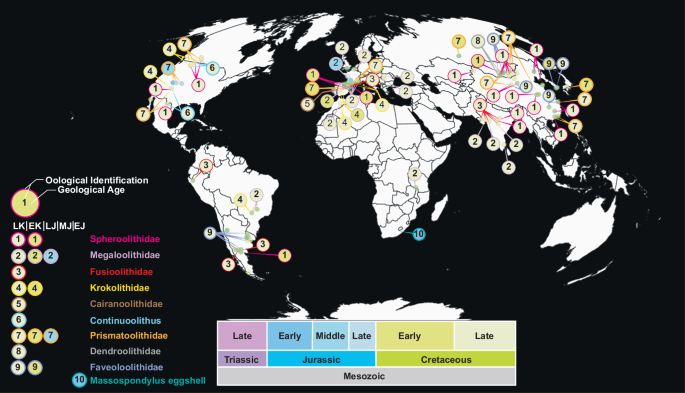
Excavation permits and international collaborations may increase, especially in countries with known nesting colonies such as Mongolia and Argentina.
Ethical and Conservation Considerations
Scientists also stress careful handling. Eggshell fragments are fragile and often rare.
Researchers aim to balance analysis with preservation. Laser methods remove only microscopic material, helping protect specimens for future study.
Some countries consider fossils national heritage objects, requiring international agreements for study. Collaborative research ensures both scientific progress and cultural preservation.
Future Research Directions
Researchers hope to apply the technique to:
- early bird eggshells
- prehistoric reptile nests
- ancient mammal eggs
They also plan to integrate isotope data with DNA protein residue studies, potentially revealing growth rates and reproductive behavior.
Further work may improve precision to less than one million years — a narrow margin in deep time.
FAQs About Dinosaur Eggshell Fragments to Improve Fossil Dating Methods
Q: Does this replace traditional fossil dating?
No. It complements volcanic and sediment dating methods.
Q: Why eggshells instead of bones?
Eggshell minerals preserve isotopes more reliably than bone.
Q: Can every fossil be dated this way?
Only fossils associated with preserved eggshell fragments can currently be dated.
Q: Why is direct dating important?
It helps scientists determine whether species truly lived together and how ecosystems evolved.