
Most people think of their refrigerator as a simple storage box. Open the door, put food wherever it fits, close the door, and move on. But this habit quietly causes more food waste, faster spoilage, and higher health risks than almost any other kitchen mistake. Learning how to organize your fridge safely is not about aesthetics or being overly neat. It is about food safety, freshness, and making your daily life easier.
When food is stored randomly, raw items can contaminate ready to eat meals, temperature sensitive products spoil early, and leftovers get pushed to the back until they are no longer safe to eat. Studies in recent years show that improper fridge storage is one of the leading causes of preventable foodborne illness at home. Understanding how to organize your fridge safely gives you control over these risks and helps your refrigerator work the way it was designed to. Many people are surprised to learn that every shelf and drawer in a fridge has a purpose. Once you know what belongs where, your fridge becomes easier to manage, groceries last longer, and meal prep feels less stressful. This guide walks you through expert approved methods that are practical, realistic, and easy to maintain.
Knowing how to organize your fridge safely starts with understanding that refrigerators are built with temperature zones. These zones are intentional. The top shelf stays the most consistent, the bottom shelf is the coldest, and the door is the warmest area. When foods are matched to the right zone, bacteria growth slows and spoilage drops significantly. Safe fridge organization also reduces cross contamination. Raw foods stay contained, cooked foods stay protected, and fresh produce stays usable for longer. This system does not require expensive organizers or complicated rules. It requires awareness, consistency, and a simple structure that works with your habits instead of against them.
Table of Contents
Stop Storing Food Randomly
| Fridge Area | Best Foods To Store | Reason |
|---|---|---|
| Top Shelf | Leftovers, cooked meals, ready to eat foods | Stable temperature and low contamination risk |
| Middle Shelf | Milk, yogurt, cheese, eggs | Consistent cooling |
| Bottom Shelf | Raw meat, poultry, seafood | Prevents raw juices from dripping |
| Crisper Drawers | Fruits in one drawer, vegetables in another | Proper humidity control |
| Door Shelves | Condiments, sauces, drinks | Warmest area of the fridge |
Understand Fridge Temperature Zones
- Not every part of your fridge is equally cold. The coldest air settles near the bottom, while warmer air circulates near the top and door. Understanding these zones is the foundation of how to organize your fridge safely.
- The top shelf is ideal for foods that will not be cooked again. The middle shelf supports dairy products that need steady temperatures. The bottom shelf is designed for raw foods that require the coldest environment. The door should only hold items that are not highly perishable. Ignoring these zones makes your fridge work harder and shortens the life of your food.
Store Ready To Eat Foods On The Top Shelf
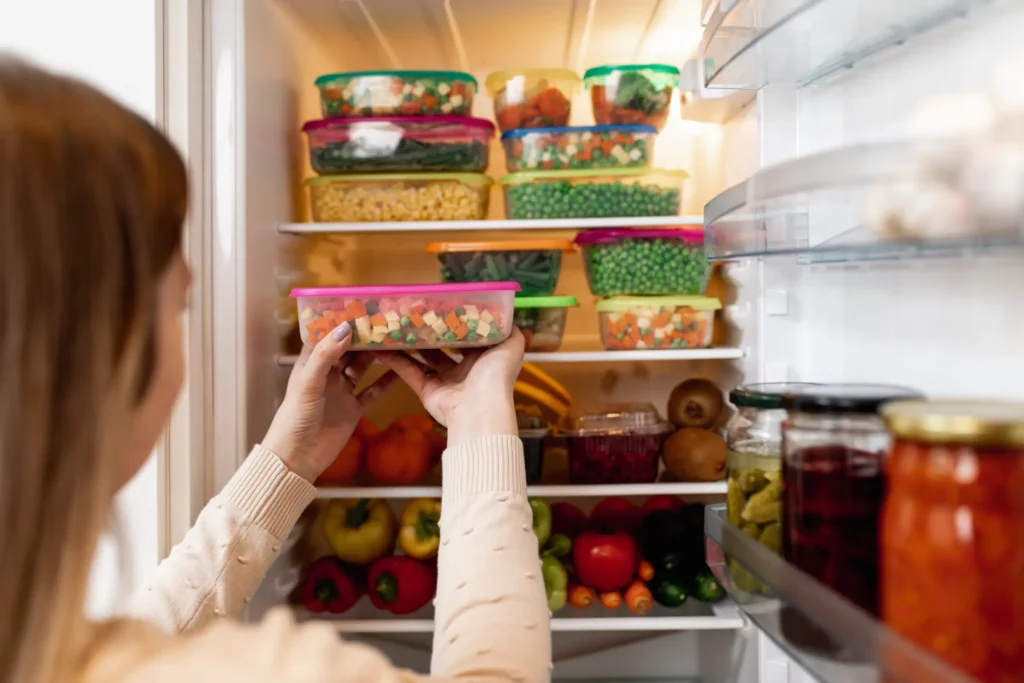
- Always store leftovers in sealed containers. Clear containers help you see what you have, reducing forgotten food and waste. Labeling leftovers with dates adds another layer of safety and makes weekly cleanouts easier. This habit alone greatly improves how to organize your fridge safely.
- The top shelf is the safest place for leftovers, cooked meals, deli foods, and snacks. These foods will not be reheated enough to kill bacteria, so keeping them away from raw items is critical.
Keep Dairy And Eggs In The Middle Shelf
- Many refrigerators include door compartments for eggs and milk, but these are not ideal locations. The middle shelf provides a more stable temperature, which helps dairy products last longer and stay safe.
- Store milk, yogurt, cheese, and eggs toward the back of the shelf where cold air is strongest. Avoid placing them near the door edge. Proper dairy placement is a simple but often overlooked part of how to organize your fridge safely.
Store Raw Meat On The Bottom Shelf Only
- Raw meat, poultry, and seafood should always go on the lowest shelf of the refrigerator. This is a strict safety rule. Raw proteins can leak juices that contain harmful bacteria. If stored higher, those juices can drip onto foods below.
- Use sealed containers or leak proof bags and keep raw items separate from one another. The bottom shelf acts as a containment zone, making cleanup easier and preventing contamination. This rule is one of the most important principles of how to organize your fridge safely.
Use Crisper Drawers Correctly
- Crisper drawers are designed to manage humidity, but they only work when used properly. Vegetables need higher humidity to stay crisp, while fruits prefer lower humidity and more airflow.
- Whenever possible, store fruits and vegetables in separate drawers. Fruits release natural gases that can cause vegetables to spoil faster. Using crispers correctly keeps produce fresh longer and reduces waste, making it an essential part of how to organize your fridge safely.
The Fridge Door Is Not For Fragile Foods
- The fridge door is the warmest part of the appliance because it is exposed to room temperature air every time it opens. This makes it unsuitable for foods that spoil easily.
- Do not store milk, eggs, or cream in the door. Instead, use this space for condiments, salad dressings, sauces, and bottled drinks. These items are less sensitive to temperature changes and remain safe even with frequent door opening.
Avoid Overcrowding Your Fridge
- An overcrowded fridge blocks airflow and creates uneven cooling. Cold air needs room to circulate around items. When shelves are packed tightly, some foods stay warmer than others, increasing spoilage risk.
- If your fridge is consistently full, consider shopping more frequently and buying smaller quantities. Leaving space between items improves efficiency and supports how to organize your fridge safely without extra effort.
Practice First In First Out Storage
- First in first out storage means using older items before newer ones. Place recently purchased groceries behind existing items so older food gets used first.
- This method is widely used in professional kitchens because it reduces waste and improves food safety. Applying it at home helps you track expiration dates and keeps food from sitting forgotten in the back of the fridge.
Keep Your Fridge Clean And Organized
- A clean fridge supports safe storage. Spills should be wiped immediately, especially those from raw foods. Bacteria can spread quickly if spills are left unattended.
- Once a month, remove all items and clean shelves and drawers with warm water and mild soap. Group similar foods together using simple bins if needed. Clean organization reinforces how to organize your fridge safely and makes daily use easier.
Adjust Your Fridge Temperature Properly
- Your refrigerator should be set at or below 40 degrees Fahrenheit. Temperatures above this range allow bacteria to grow more quickly. Use a fridge thermometer if your appliance does not display internal temperature accurately.
- Consistent temperature control works hand in hand with proper placement. Even the best organization cannot compensate for incorrect temperature settings.
Common Fridge Organization Mistakes To Avoid
- One common mistake is storing hot food directly in the fridge. Allow food to cool slightly before refrigerating to avoid raising internal temperatures. Another mistake is ignoring expiration dates. Organization does not replace regular checks.
- Storing everything in original packaging can also be problematic. Some packaging is not leak proof or space efficient. Transferring foods to sealed containers improves safety and visibility.
Benefits Of Organizing Your Fridge Safely
- When you master how to organize your fridge safely, you notice immediate benefits. Food stays fresh longer, grocery bills shrink, and cooking becomes more efficient. You spend less time searching for ingredients and less money replacing spoiled items.
- There is also peace of mind. Knowing that your fridge is set up to prevent contamination and waste reduces daily stress and supports healthier eating habits.
FAQs on Stop Storing Food Randomly
How Often Should I Reorganize My Fridge
A quick check once a week is ideal. A deeper clean and reorganization once a month keeps everything safe and efficient.
Can Leftovers Be Stored Anywhere in the Fridge
Leftovers should always be stored on the top shelf to avoid contact with raw foods.
Is It Safe to Store Eggs in the Door
Eggs last longer and stay safer when stored on the middle shelf instead of the door.
Does Fridge Organization Really Reduce Food Waste
Yes. Organized fridges consistently reduce food waste by helping people see and use what they already have.