
Strange Circular Patterns Appear In Scottish Waters: The news that Strange Circular Patterns Appear in Scottish Waters has sparked curiosity among scientists, environmentalists, and everyday readers across the globe. These unusual rings, discovered on the seabed near Scotland’s Outer Hebrides, look like giant underwater donuts etched into fields of seagrass. Marine researchers refer to them as “seagrass fairy circles,” and although the name sounds magical, the science behind them is very real. At first glance, these circles might seem like a quirky natural curiosity. But experts say they actually reveal something much deeper about how ecosystems organize themselves. Scientists studying these formations believe they are the result of natural processes involving plant competition, sediment movement, and marine life activity. However, there’s a growing concern that these fascinating patterns could soon vanish due to environmental changes affecting seagrass ecosystems worldwide.
For folks who spend their lives studying oceans, this discovery is both exciting and worrying. These circular formations provide valuable clues about the health of marine habitats. If the conditions that allow them to form disappear, it may signal bigger problems happening beneath the waves. Understanding what these patterns mean could help scientists protect critical coastal ecosystems that millions of people depend on.
Table of Contents
Strange Circular Patterns Appear In Scottish Waters
The discovery that strange circular patterns appear in Scottish waters offers a fascinating glimpse into the complexity of marine ecosystems. These seagrass fairy circles show how natural processes such as plant competition, sediment movement, and microbial activity can create remarkable patterns beneath the ocean surface. However, scientists warn that the ecosystems supporting these formations are under threat from climate change, pollution, and human activities. Protecting seagrass habitats is essential not only for preserving these unique natural patterns but also for maintaining healthy oceans, sustainable fisheries, and a stable climate for future generations.
| Topic | Details |
|---|---|
| Discovery Location | Outer Hebrides, Scotland |
| Pattern Name | Seagrass Fairy Circles |
| Ecosystem Type | Coastal seagrass meadow |
| Environmental Role | Carbon storage, habitat protection |
| Major Threats | Climate change, pollution, seabed disturbance |
| Global Importance | Seagrass ecosystems support fisheries and biodiversity |
| Scientific Research | Studied by marine ecologists and conservation groups |
| Official Reference | https://www.nature.scot |
Understanding the Strange Circular Patterns Appear In Scottish Waters?
The strange circular patterns appearing in Scottish waters were first noticed through aerial imaging and underwater surveys conducted by marine researchers studying coastal ecosystems. The formations appear as ring-shaped patches of seagrass, where lush vegetation grows around the outer edge while the center area remains bare or sparsely covered.
Imagine standing in a grassy field and seeing perfectly round patches where grass grows thick around the edges but is missing in the middle. Now picture that same pattern happening underwater across an entire seabed. That’s essentially what scientists are seeing in the waters surrounding the Outer Hebrides.
These formations are part of seagrass meadows, which are underwater ecosystems formed by flowering plants that grow in shallow marine environments. Unlike seaweed, seagrass plants have roots, stems, and leaves, making them more similar to plants found on land.
Seagrass meadows are incredibly productive ecosystems. According to the United Nations Environment Programme, they occupy less than 0.2% of the ocean floor yet support a significant portion of marine biodiversity. These habitats act as nurseries for fish, feeding grounds for wildlife, and carbon storage systems that help regulate Earth’s climate.
The Science Behind Strange Circular Patterns Appears In Scottish Waters
Researchers are still investigating exactly why these circular formations appear, but several scientific theories help explain the phenomenon.
Natural Plant Competition
One of the most widely accepted explanations involves competition for nutrients and space. Plants growing close together must compete for essential resources such as nitrogen, phosphorus, sunlight, and oxygen within the sediment.
Over time, the center of a seagrass patch may become depleted of nutrients. When that happens, plants at the center stop growing or die off, while those around the edges continue thriving. This creates a natural ring pattern.
Ecologists call this process self-organization, a concept where ecosystems naturally develop patterns without any external direction.
Sediment and Water Movement
Another factor influencing the formation of these patterns is ocean currents and sediment movement. Water flow across the seabed can redistribute sand, organic material, and nutrients.
Areas receiving more nutrients allow seagrass to flourish, while regions lacking nutrients struggle to support plant growth. Over time, this uneven distribution can lead to the formation of repeating circular patterns.
Grazing Marine Animals
Some scientists also suspect marine animals may contribute to the pattern formation. Crabs, worms, snails, and other small organisms feed on seagrass or disturb sediments as they move around.
If animals repeatedly graze the center of a patch while leaving outer areas intact, the result can resemble the donut-shaped formations seen in Scottish waters.
Microbial Activity in Sediment
Another interesting possibility involves microbial communities living within the sediment. These microscopic organisms influence nutrient cycling in marine ecosystems.
Some microbes release chemicals that help plants grow, while others break down organic matter in ways that change soil chemistry. These interactions could create zones where seagrass thrives and areas where it struggles.
Why Seagrass Meadows Are Critical for Ocean Health?
Understanding the importance of these circular formations requires understanding the broader value of seagrass ecosystems.
Carbon Storage Powerhouses
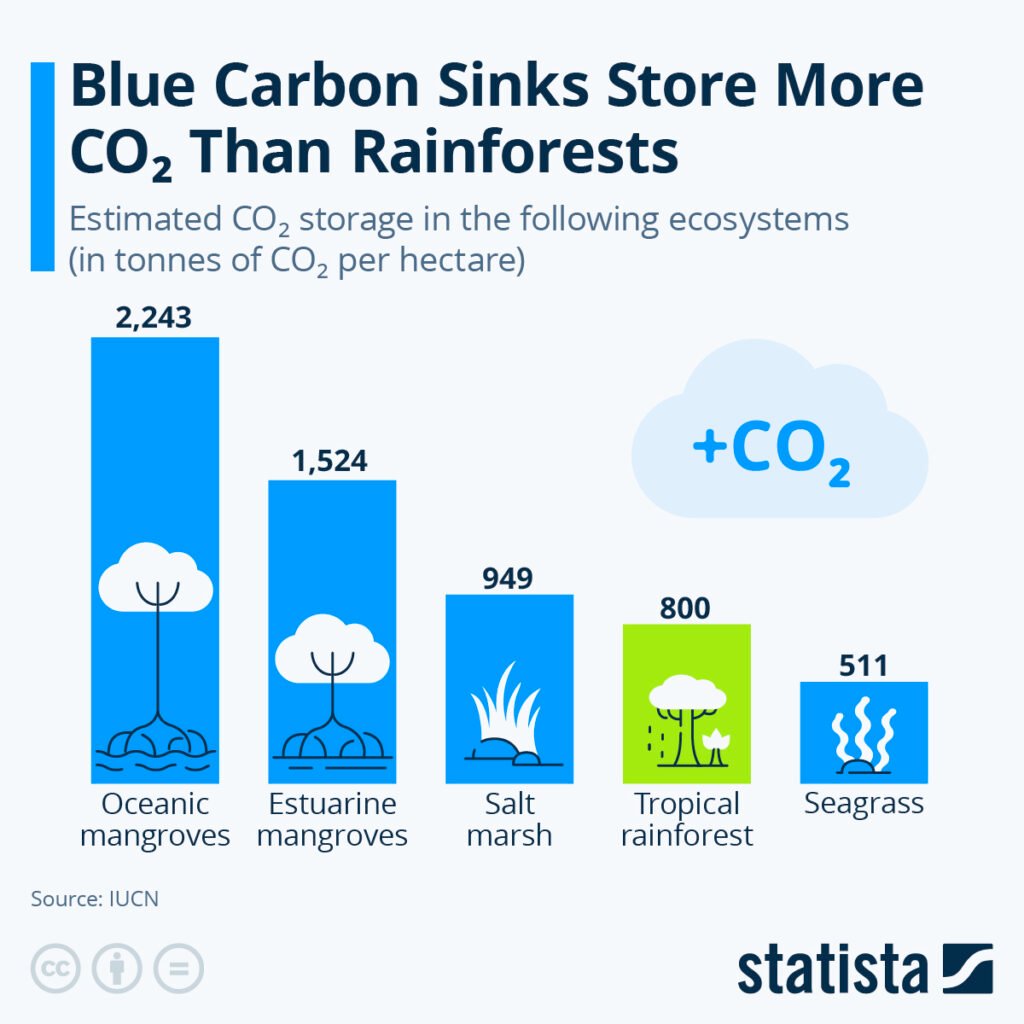
Seagrass meadows play a major role in what scientists call blue carbon ecosystems. These ecosystems capture and store carbon dioxide from the atmosphere.
According to the United Nations Environment Programme, seagrass ecosystems can store up to 35 times more carbon per acre than tropical rainforests.
This makes them extremely important in the fight against climate change.
By trapping carbon within their roots and sediments, seagrass beds help reduce greenhouse gases that contribute to global warming.
Essential Habitat for Marine Life
Seagrass meadows provide shelter and food for thousands of marine species. Young fish often spend the early stages of their lives in these habitats because the thick vegetation protects them from predators.
According to the National Oceanic and Atmospheric Administration (NOAA), many commercially valuable fish species rely on seagrass habitats during their life cycles.
Without healthy seagrass ecosystems, fisheries that support coastal economies could decline dramatically.
Natural Coastal Protection
Another benefit of seagrass ecosystems is their ability to protect coastlines from erosion. The roots of seagrass plants hold sediments in place, stabilizing the seabed and reducing wave energy.
During storms, seagrass beds act like natural barriers, helping prevent coastal damage.
Communities living near shorelines benefit directly from these protective effects.
Why Scientists Are Concerned These Patterns May Disappear?
While the discovery of these circular formations is fascinating, researchers warn that the conditions supporting them may not last forever.
Seagrass ecosystems worldwide are facing increasing threats from human activity and environmental changes.
Climate Change and Ocean Warming
Rising ocean temperatures can stress marine plants. When water temperatures climb beyond certain thresholds, seagrass growth slows or stops altogether.
Climate change also increases the frequency of extreme weather events, which can damage coastal ecosystems.
Pollution and Runoff
Pollution from agriculture, cities, and industry often flows into coastal waters. Excess nutrients from fertilizers can cause algal blooms that block sunlight from reaching seagrass beds.
Without sufficient sunlight, seagrass cannot perform photosynthesis effectively.
Physical Damage to the Seabed
Human activities such as trawling, dredging, and boat anchoring can physically destroy seagrass habitats. Because these plants grow slowly, damage can take years to repair.
According to the World Resources Institute, approximately 7% of global seagrass habitat is lost each year.
If this trend continues, unique natural patterns like the Scottish fairy circles could disappear entirely.
How Scientists Study Seagrass Ecosystems?
Investigating underwater ecosystems requires a combination of modern technology and traditional field research.
Marine scientists studying the circular formations in Scottish waters use several methods to collect data and monitor environmental conditions.
Aerial Imaging and Drone Surveys
High-resolution drones and satellite images allow researchers to map seagrass beds from above. These images help scientists identify patterns and track changes over time.
Underwater Diving Surveys
Divers examine the seabed directly to measure plant density, sediment composition, and marine life activity.
These observations provide valuable insights that cannot always be captured through aerial imaging alone.
Sediment Sampling
Scientists collect sediment samples to analyze nutrient levels, microbial communities, and organic matter content.
This data helps explain how environmental conditions influence plant growth.
Long-Term Monitoring
Because ecosystems change slowly, researchers often monitor sites for many years. Long-term studies reveal trends that short-term research might miss.
Organizations such as NatureScot, the International Union for Conservation of Nature, and various marine research institutes collaborate on these studies.
Efforts to Protect and Restore Seagrass Habitats
Fortunately, scientists and conservation groups around the world are working to protect seagrass ecosystems before more damage occurs.
Marine Protected Areas
Many countries establish marine protected areas where harmful activities like dredging or destructive fishing are restricted.
These protected zones give ecosystems time to recover naturally.
Seagrass Restoration Projects
Restoration programs involve planting seagrass seeds or transplanting healthy plants into damaged areas.
One of the most successful restoration efforts took place in Virginia’s coastal bays, where scientists restored more than 9,000 acres of seagrass meadow.
This project demonstrates that damaged ecosystems can recover with the right management strategies.
Improving Water Quality
Reducing pollution is another critical step. Better wastewater treatment and sustainable farming practices can help reduce nutrient runoff into coastal waters.
Cleaner water allows sunlight to reach seagrass beds, supporting healthy plant growth.
Earth’s Oceans Just Logged Another Record Heat Year — Why Scientists Are Concerned
Starlink Satellites Are Reentering More Frequently — What It Means for Earth
Rock From Mars Reveals Traces of Water After Detailed Scanning