
For years, farmers have relied heavily on chemical sprays to protect crops from destructive insects. Those chemicals helped boost global food production, but they also created new problems. Resistant pests, polluted water, declining pollinator populations, and concerns about food safety have forced agriculture to rethink its approach. Today, a quiet shift is happening in fields and research labs around the world. A naturally occurring fungus is stepping into the spotlight as a serious alternative to synthetic pesticides. At the center of this conversation is Metarhizium anisopliae, a soil dwelling fungus that infects and kills insects. Researchers and agricultural experts believe Metarhizium anisopliae could reshape modern pest management. As sustainability becomes more than just a marketing word in 2026, interest in biological insecticides like Metarhizium anisopliae is accelerating. Farmers are actively searching for safer, long-term solutions that protect crops without damaging ecosystems.

Metarhizium anisopliae is known as an entomopathogenic fungus, which simply means it naturally infects insects. Unlike chemical pesticides that rely on toxic compounds, this fungus works through infection. When spores come into contact with an insect, they attach to the outer shell, penetrate it, and grow inside the body. Within a few days, the insect dies. Afterward, new spores are released, continuing the cycle. What makes Metarhizium anisopliae especially appealing is its targeted action. It primarily affects insects and does not harm plants, humans, livestock, or most beneficial organisms when used correctly. Because of this, it fits neatly into integrated pest management programs that aim to reduce chemical dependency. Farmers are not just looking for eco friendly options. They also want solutions that work. Field trials show that properly formulated Metarhizium anisopliae products can effectively control pests such as locusts, beetles, termites, aphids, and even mosquitoes. With ongoing improvements in formulation technology, its performance continues to improve under different environmental conditions.
Table of Contents
The Future of Pest Control
| Feature | Details |
|---|---|
| Scientific Name | Metarhizium anisopliae |
| Type | Entomopathogenic fungus |
| Function | Biological insecticide |
| Target Pests | Locusts, termites, beetles, aphids, mosquitoes |
| Mode Of Action | Infects through insect cuticle and grows internally |
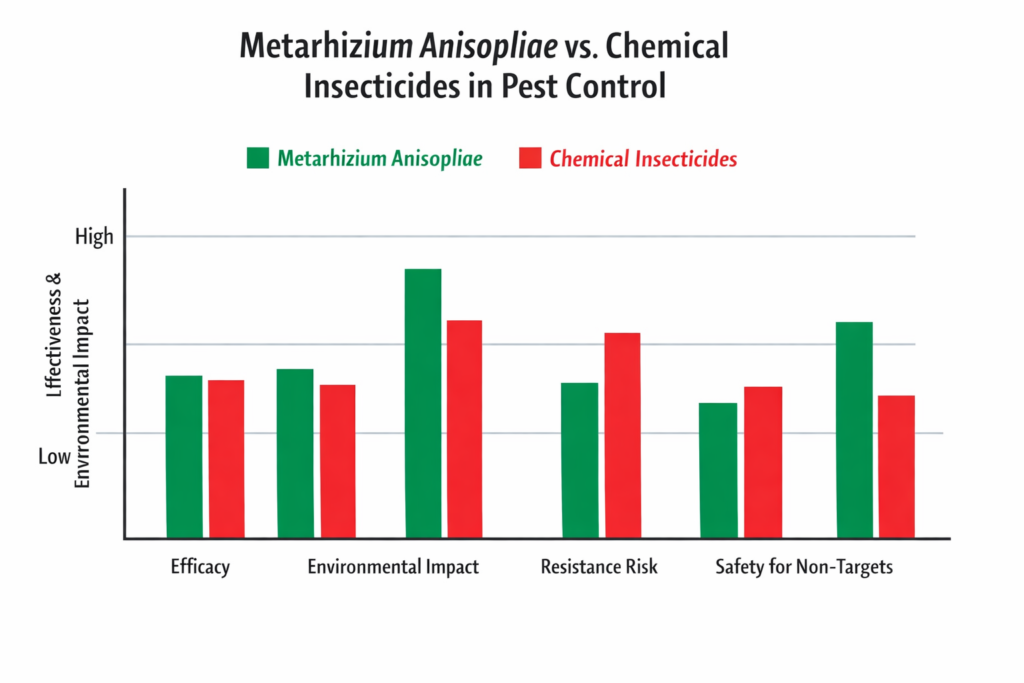
| Environmental Impact | Low toxicity, minimal residue |
| Resistance Risk | Lower than many chemical insecticides |
| Application Methods | Spray, soil treatment, seed coating |
| Role In Farming | Part of sustainable pest management programs |
The future of pest control is evolving rapidly. Chemical insecticides once seemed like the only reliable solution, but their environmental and resistance related drawbacks are becoming harder to ignore. Metarhizium anisopliae offers a powerful, science backed alternative that works with nature rather than against it. While challenges such as weather sensitivity and slower action remain, ongoing innovation is steadily improving performance. For farmers seeking safer, sustainable, and forward-thinking pest control strategies, fungal insecticides deserve serious consideration. The next generation of agriculture may very well depend on microscopic allies living beneath our feet.
What Makes This Fungus So Effective?
Natural Infection Process
- The strength of Metarhizium anisopliae lies in how it attacks. The spores land on the insect’s outer layer and begin to germinate. They produce enzymes that break down the tough outer covering. Once inside, the fungus spreads throughout the insect’s body, consuming nutrients and releasing compounds that lead to death.
- This biological approach is very different from chemical pesticides that target the nervous system. Because the fungus physically invades and grows inside the insect, pests find it much harder to develop resistance quickly. That alone makes Metarhizium anisopliae a valuable tool in long term pest control strategies.
- Another advantage is its ability to persist in soil. In favorable conditions, spores remain viable and continue suppressing pest populations without constant reapplication.
Target Specific Action
- One of the biggest concerns with traditional pesticides is collateral damage. Broad spectrum chemicals often harm pollinators, natural predators, and other beneficial insects. This disrupts ecological balance and sometimes leads to even worse pest outbreaks.
- Metarhizium anisopliae works differently. It mainly targets specific insect hosts. When applied carefully, it leaves pollinators and other helpful species largely unaffected. For farmers working toward organic certification or reduced pesticide use, that is a major benefit.
Why Chemical Insecticides Are Losing Ground
Environmental Concerns
- Chemical pesticides have long been associated with soil degradation and water contamination. Runoff from treated fields can enter rivers and groundwater. In many regions, stricter regulations are limiting the use of certain synthetic chemicals.
- Governments and consumers alike are demanding safer food production systems. As a result, biological pest control solutions are gaining momentum. Fungal biopesticides provide effective control while reducing environmental risk.
Resistance Problems
- Insect resistance is a serious global challenge. Decades of repeated chemical use have allowed many pests to evolve defenses against common insecticides. Farmers then respond by increasing doses or switching to stronger chemicals, creating a costly cycle.
- Metarhizium anisopliae offers a different mode of action. Because it infects insects rather than poisoning them, resistance develops much more slowly. This makes it a strong candidate for inclusion in resistance management programs.
Human Health Risks
Reducing chemical exposure benefits farm workers and nearby communities. While modern pesticides are regulated, accidental exposure still occurs. Biological alternatives lower the overall chemical load in agricultural systems and help create safer working environments.
Real World Applications
Controlling Locust Swarms
- Locust outbreaks remain one of the most destructive agricultural threats in parts of Africa and Asia. Traditional aerial chemical spraying can harm non target organisms and contaminate grazing lands.
- Biological products based on Metarhizium anisopliae have been used to control locust populations more sustainably. The fungus spreads among insects in the swarm, gradually reducing their numbers without widespread environmental harm.
Fighting Mosquito Borne Diseases
- Mosquitoes are not just crop pests. They spread serious diseases. Researchers are testing fungal treatments applied to mosquito resting surfaces. When mosquitoes land, spores attach and begin the infection process.
- This method offers a promising complement to chemical fogging, especially in areas where mosquitoes have developed resistance to common insecticides.
Soil Pest Management
Because Metarhizium anisopliae naturally lives in soil, it is highly effective against pests that spend part of their life cycle underground. Beetle larvae and termites can cause major root damage. Soil treatments or treated seeds introduce the fungus directly into the pest’s habitat, offering targeted protection.
Advantages Over Traditional Chemicals
Sustainability
Sustainability is no longer optional. Retailers and consumers increasingly demand food grown with fewer synthetic inputs. Biological insecticides help farmers meet these expectations while maintaining yields. Metarhizium anisopliae supports long term soil health and biodiversity. It works alongside crop rotation, beneficial insects, and precision agriculture practices.
Reduced Ecological Damage
By preserving natural predators and pollinators, fungal pest control helps maintain ecological balance. Healthy ecosystems often regulate pest populations naturally, reducing the need for heavy intervention.
Lower Residue Levels
Consumers are paying closer attention to pesticide residues on food. Crops treated with biological agents typically show minimal chemical residue, which strengthens market appeal.
Challenges That Remain
Despite its promise, fungal pest control is not a perfect solution.
Slower Action
Chemical pesticides can kill insects within hours. Fungal infections may take several days. In severe outbreaks, farmers sometimes combine biological methods with limited chemical use for faster results.
Weather Sensitivity
Environmental conditions matter. High humidity often improves fungal performance, while extreme heat and strong sunlight can reduce spore survival. Researchers are developing improved formulations to address these challenges.
Production And Storage
Producing high quality spores at scale requires advanced facilities. Storage conditions must preserve viability until application. Fortunately, advances in biotechnology are steadily improving production efficiency.
Ongoing Research and Innovation
- Investment in biological crop protection continues to grow. Scientists are improving strains of Metarhizium anisopliae to increase tolerance to ultraviolet light and temperature fluctuations. New oil based formulations help spores stick more effectively to insect bodies.
- Some researchers are exploring combinations of fungal spores with attractants or low dose chemicals to enhance speed and coverage. These hybrid strategies aim to maximize effectiveness while still reducing chemical reliance.
- The global biopesticide market is projected to expand significantly over the next decade. As regulatory pressure increases and public demand for sustainable agriculture rises, fungal insecticides are expected to play a central role.
The Future of Sustainable Pest Management
- Agriculture faces a complex future. Climate change is altering pest patterns and expanding insect ranges. Farmers need flexible, environmentally responsible solutions.
- Metarhizium anisopliae represents more than a new product. It represents a shift in mindset. Instead of fighting nature with stronger chemicals, we are learning to use natural biological processes to restore balance.
- The transition will not happen overnight. Chemical insecticides will likely remain part of pest management for years to come. However, their dominance is clearly being challenged. As research advances and farmers gain confidence in biological alternatives, fungal pest control may become a standard practice rather than a niche option.
FAQs on The Future of Pest Control
1. Is Metarhizium Anisopliae Safe For Humans And Animals?
Yes. When used according to agricultural guidelines, it poses minimal risk to humans, livestock, and wildlife because it specifically targets insects.
2. How Long Does It Take to Kill Insects?
Infected insects usually die within several days. The exact timing depends on temperature, humidity, and the pest species.
3. Can It Completely Replace Chemical Insecticides?
In some cases, it can, but most experts recommend using it as part of an integrated pest management program that may include limited chemical support.
4. Does It Harm Beneficial Insects?
It is generally selective, but careful application is important to protect pollinators and natural predators.