
Right Daily Portion of Nuts: Nutrition Experts Explain the Right Daily Portion of Nuts and Potential Effects in a way that makes sense whether you’re packing a school lunch in Ohio, training clients in California, or advising patients in a clinic in Texas. Across the United States, nuts have become a staple in everything from keto meal plans to plant-based diets. But the real question people ask—at least the smart ones—is this: How much should I actually be eating every day? Here’s the straight talk. Nuts are nutrient-dense powerhouses, but they’re also calorie-dense. That means the benefits are real, but so is the need for portion control. As someone who has worked closely with registered dietitians, sports nutrition specialists, and public health researchers, I’ve seen how small, consistent dietary changes—like eating the right amount of nuts—can move the needle on cholesterol, blood sugar, and long-term heart health.
Table of Contents
Right Daily Portion of Nuts
Nutrition Experts Explain the Right Daily Portion of Nuts and Potential Effects with clarity: about 1 ounce per day delivers meaningful cardiovascular, metabolic, and longevity benefits without promoting weight gain—when consumed mindfully. For everyday Americans, that means a simple handful can make a difference. For healthcare professionals, nuts represent an evidence-backed, practical recommendation that fits seamlessly into preventive nutrition strategies. In a world full of fad diets and flashy superfoods, nuts remain steady, reliable, and supported by decades of research. Keep it simple. Measure once. Choose unsalted. Replace junk snacks. Stay consistent. Small habits build strong health. And sometimes, that strength starts with a handful.
| Topic | Key Data & Facts | Professional Insight |
|---|---|---|
| Recommended Daily Portion | 1 ounce (28–30g) per day | Roughly a small handful |
| Heart Disease Risk | Up to 25% lower risk with frequent intake | Based on long-term U.S. cohort studies |
| Calories per Serving | 160–200 calories per ounce | Energy-dense but nutrient-rich |
| Diabetes & Blood Sugar | Improved insulin sensitivity observed | Supported by clinical trials |
| Sodium Recommendation | Under 2,300 mg/day | Choose unsalted nuts |
What Is the Right Daily Portion of Nuts?
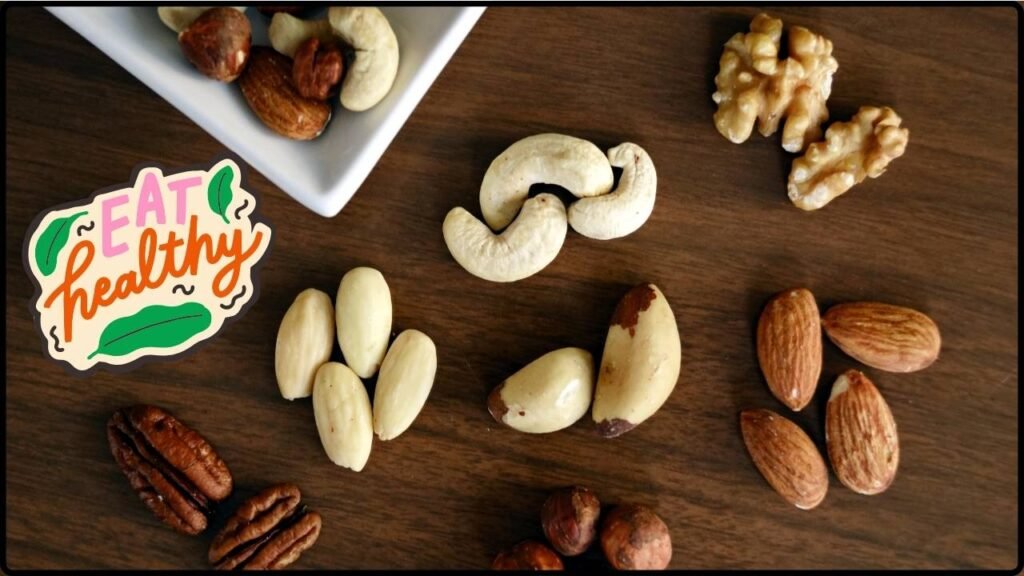
Let’s start simple and clear. The right daily portion of nuts for most adults is 1 ounce (28–30 grams). This recommendation aligns with the Dietary Guidelines for Americans published by the U.S. Departments of Health and Human Services and Agriculture.
What does 1 ounce look like?
- 23 almonds
- 14 walnut halves
- 18 cashews
- 49 pistachios
- 12–15 pecan halves
If you don’t have a scale handy, think of a small handful—the kind that fits comfortably in your palm without overflowing.
For professionals advising clients: emphasizing weight measurement at least once helps improve portion awareness. After that, visual recognition becomes intuitive.
Why the Right Daily Portion of Nuts Matters?
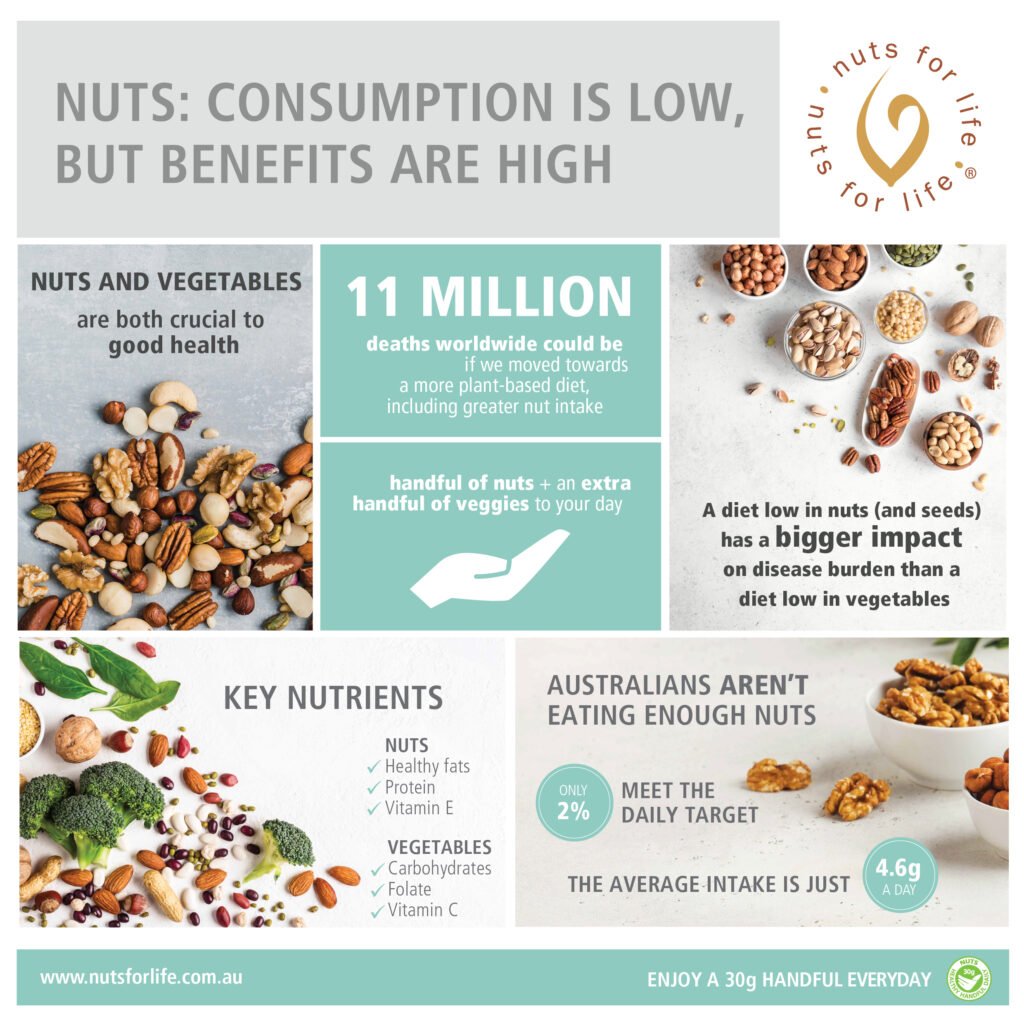
Here’s where a lot of folks in the U.S. get tripped up. Nuts are healthy—but they’re also calorie-dense. One ounce delivers about 160 to 200 calories, depending on the type. Compare that to a large fast-food cookie that clocks in around 250 calories, and nuts still come out ahead nutritionally. But eat three handfuls absentmindedly during a Netflix binge? That’s 500–600 calories before dinner.
From a metabolic standpoint, nuts contain:
- Monounsaturated and polyunsaturated fats
- Plant-based protein
- Dietary fiber
- Magnesium
- Vitamin E
- Antioxidants
These nutrients support cardiovascular function, blood sugar stability, and inflammation control. But excessive caloric intake—even from healthy sources—can contribute to weight gain if not balanced with overall energy expenditure.
The Science Behind the Right Daily Portion of Nuts Benefits
Let’s get into the evidence.
Cardiovascular Health
Large prospective cohort studies in the United States, including data reviewed by Harvard T.H. Chan School of Public Health, show that individuals who consume nuts five or more times per week have up to a 20–25% lower risk of coronary heart disease compared to those who rarely eat nuts.
The mechanisms are well understood:
- Lower LDL cholesterol
- Reduced oxidative stress
- Improved endothelial function
- Decreased systemic inflammation
Walnuts, in particular, contain alpha-linolenic acid (ALA), a plant-based omega-3 fatty acid linked to heart health.
For clinicians and healthcare professionals: nut consumption fits cleanly within Mediterranean and DASH dietary patterns, both strongly supported by cardiovascular outcome trials.
Weight Management and Satiety
Now let’s talk about something that surprises a lot of people: nuts don’t automatically cause weight gain.
According to the Mayo Clinic and multiple randomized controlled trials, moderate nut intake does not significantly increase body weight. Why?
- Nuts increase satiety (you feel full longer).
- Some fat in nuts is not fully absorbed by the body.
- Replacing processed snacks with nuts reduces overall junk calorie intake.
Behaviorally speaking, nuts slow down eating. Shelling pistachios, for example, creates a natural pause that encourages mindful eating. That’s a small trick, but it works.
Blood Sugar Control and Type 2 Diabetes
Research supported by the American Diabetes Association suggests that nuts improve glycemic control when incorporated into balanced meals.
Nuts are:
- Low in digestible carbohydrates
- High in fiber
- Rich in healthy fats
That combination slows glucose absorption and reduces post-meal blood sugar spikes.
For patients with insulin resistance, replacing refined carbohydrate snacks with nuts can stabilize glucose patterns throughout the day.
Cancer and Longevity Insights
Observational studies, including long-term U.S. health research cohorts, show associations between regular nut consumption and lower all-cause mortality.
While correlation does not equal causation, nuts consistently appear in dietary patterns associated with longevity. Their antioxidant and anti-inflammatory properties likely play a protective role.
From a professional perspective, nuts are rarely consumed in isolation. They are markers of broader healthy behaviors, including higher intake of fruits, vegetables, and whole grains.
Potential Risks and Considerations
Balanced reporting matters.
Caloric Density
Overeating nuts can easily push someone into caloric surplus. For individuals aiming for weight loss, nuts should replace—not add to—existing calorie sources.
Sodium Content
Salted and flavored nuts can contain significant sodium. The American Heart Association recommends limiting sodium intake to less than 2,300 milligrams per day.
Choosing unsalted or dry-roasted varieties supports cardiovascular health goals.
Nut Allergies
Tree nut allergies affect millions of Americans and can be life-threatening. Strict avoidance is necessary for affected individuals.
Brazil Nuts and Selenium
Brazil nuts are extremely high in selenium. While selenium is essential, excessive intake can cause toxicity. Limiting to 1–2 Brazil nuts per day is considered safe.
How Different Nuts Compare Nutritionally?
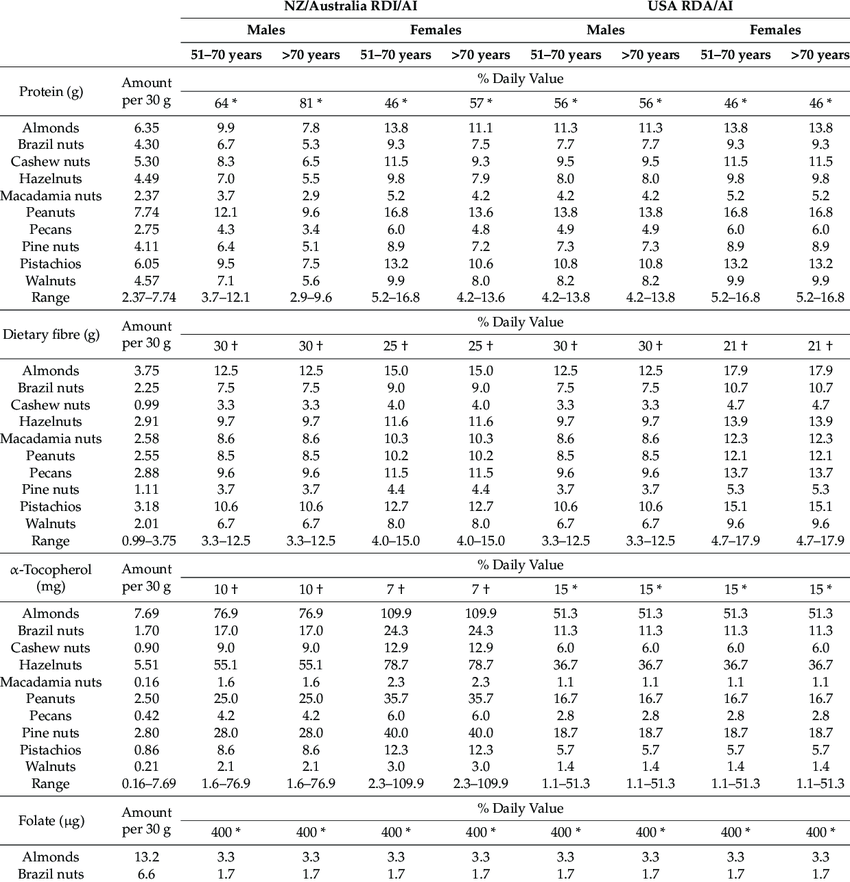
Each nut brings something different to the table.
Almonds are rich in vitamin E and magnesium.
Walnuts provide omega-3 fatty acids.
Pistachios contain lutein and zeaxanthin, beneficial for eye health.
Cashews offer iron and zinc.
Pecans are high in antioxidants.
For professionals creating meal plans, rotating nut varieties ensures broader micronutrient coverage.
Practical Ways to Add Nuts to Your Daily Routine
Let’s make this actionable.
Replace Less Nutritious Snacks
Instead of:
- Potato chips
- Candy bars
- Sugary granola bars
Choose:
- A measured ounce of mixed nuts
- Almonds with apple slices
- Pistachios alongside Greek yogurt
Use Nuts in Meals
Add chopped walnuts to oatmeal.
Sprinkle almonds on salads.
Blend cashews into sauces for plant-based creaminess.
Use crushed pecans as a coating for baked chicken or fish.
These swaps increase nutrient density without dramatic calorie increases.
Pair with Protein and Fiber
Nuts work best when combined with other whole foods. For example:
- Cottage cheese with almonds
- Yogurt with pistachios
- Peanut butter on whole-grain toast
This combination improves satiety and stabilizes blood sugar.
Professional Applications for Dietitians and Coaches
For healthcare providers and nutrition coaches, recommending nuts aligns with major U.S. dietary frameworks:
- Mediterranean diet
- DASH diet
- Plant-forward dietary patterns
Behavioral coaching tip: encourage clients to pre-portion nuts into small containers at the beginning of the week. This reduces mindless overeating.
Workplace wellness programs increasingly incorporate nut snack options because of their portability, shelf stability, and nutrient profile.
Study Suggests Humans May Naturally Live Longer Than Expected
Researchers Find Fermented Kimchi May Boost Immunity in a Balanced Way
How Death Records Became a Survival Tool During London’s 1665 Plague