

Every year, the American tax season arrives with the same mix of urgency and confusion. The 2026 filing season, which covers income earned in 2025, is no different. Millions of taxpayers — including citizens abroad, freelancers, employees, retirees, and investors — must submit returns to the Internal Revenue Service (IRS).

Missing dates, misunderstanding extensions, or assuming payment can wait are among the most common and costly mistakes. The reality is simple: tax filing in the United States is as much about timing as it is about accuracy. Filing correctly and on schedule can save hundreds or even thousands of dollars in penalties and interest.
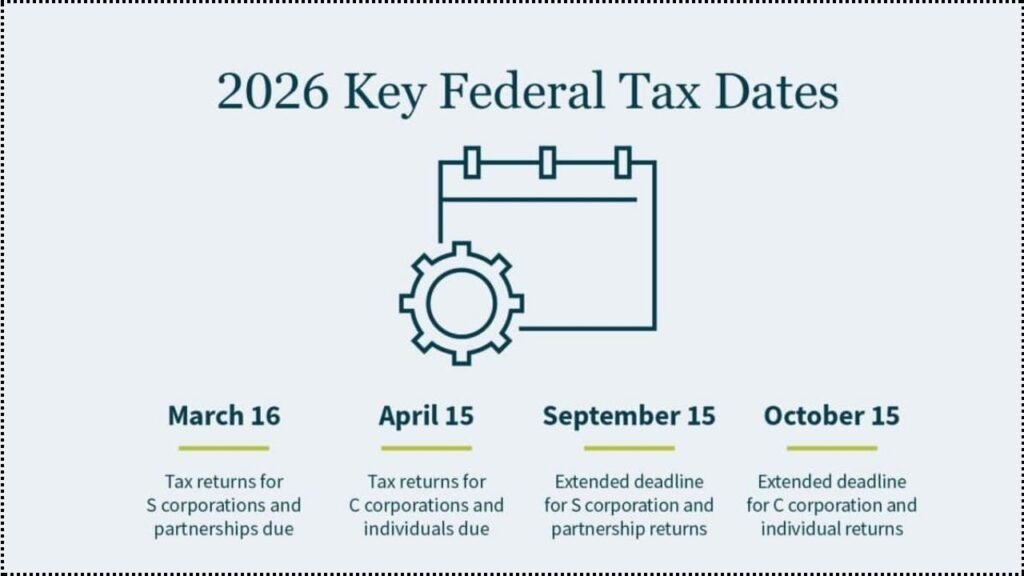
The most important thing taxpayers need to know first is when everything happens. The filing season typically opens in late January, and from that moment, individuals can submit their federal returns electronically or by paper. The primary deadline is April 15, 2026. By this date, taxpayers must both file their return and pay any taxes owed. Many people misunderstand extensions and believe they delay payment — they do not. An extension only gives extra time to send paperwork, not extra time to pay the tax liability.
Table of Contents
US Tax Filing 2026
| Item | Details |
|---|---|
| Filing season opens | January 26, 2026 |
| Main filing & payment deadline | April 15, 2026 |
| Extension filing deadline | October 15, 2026 |
| Estimated tax payments | Quarterly throughout 2026 |
| Refund (e-file + direct deposit) | About 21 days |
| Paper filing refund | 4+ weeks |
| Extension form | Form 4868 |
Key Tax Dates (2026 Filing Season)
The IRS starts accepting returns toward the end of January. Early filing has advantages: faster refunds and reduced identity-theft risk. Waiting until April compresses the timeline and increases the chance of errors.
April 15, 2026 is the central deadline. By that day:
- The return must be submitted.
- Taxes owed must be paid.
Taxpayers who cannot finish paperwork may file Form 4868, which moves the filing deadline to October 15, 2026. However, payment is still due in April. Interest and penalties begin immediately on unpaid balances.
Freelancers and self-employed individuals must also make quarterly estimated tax payments during the year. Missing those payments can trigger additional charges even if the final return is filed on time.
What Happens If You File Late (Penalties)
The IRS separates late penalties into two categories. Many taxpayers are surprised to learn the larger penalty is not for failing to pay — it is for failing to file.
Failure-to-File Penalty
This penalty is severe. It is 5% of unpaid tax per month, up to a maximum of 25%. If the return is more than 60 days late, a minimum penalty may apply, which can be hundreds of dollars even if the tax due is small.
This is why tax professionals repeatedly emphasize one rule:
File your return even if you cannot pay the tax immediately.
Failure-to-Pay Penalty
This penalty is smaller but still significant. It equals 0.5% of the unpaid tax per month, up to 25%. Interest also accumulates daily.
When both penalties apply, the total monthly impact is still substantial. Over time, combined penalties and interest can approach nearly half of the original tax owed.
If You Can’t Pay — What To Do (Very Important)
Many taxpayers avoid filing because they lack the funds to pay. Ironically, that decision causes the most financial damage. The IRS generally prefers communication and offers solutions.
After filing the return, taxpayers may request:
- Installment payment plans
- Partial payment agreements
- Temporary hardship status
Setting up a payment plan dramatically reduces the monthly penalty and prevents collection actions. Ignoring notices, on the other hand, can eventually lead to liens, garnishments, or bank levies.
Extensions & Special Cases
An extension is helpful but frequently misunderstood. Filing for an extension does not increase the time to pay taxes. Taxpayers must estimate their liability and submit payment by April 15 to avoid penalties.
Some individuals automatically receive additional time, including:
- U.S. citizens living abroad
- Military personnel in combat zones
- Residents of federally declared disaster areas
Even in these situations, interest may still accrue on unpaid taxes.
Refunds & Processing Time
Most taxpayers expect refunds, and the IRS encourages electronic filing with direct deposit. Returns submitted electronically typically result in refunds within about three weeks.
Paper returns take considerably longer, often more than a month. Refunds that include credits such as the Earned Income Tax Credit or Child Tax Credit may take slightly longer because the IRS conducts additional verification checks.
Key Changes & Deductions (2026 Season)
The 2026 filing season includes inflation-adjusted tax benefits and updated deductions.
Important updates include:
- Higher standard deduction levels
- Continued Child Tax Credit eligibility
- Expanded deductions affecting certain expenses
- Updated limits on itemized deductions
These adjustments are meant to account for rising living costs and typically reduce taxable income for many households.
Biggest Mistakes Filers Make
Despite clear IRS instructions, several recurring mistakes appear every year.
Common errors include:
- Waiting until April to gather documents
- Forgetting freelance or gig income
- Ignoring investment or crypto income
- Believing an extension delays payment
- Not filing because of inability to pay
Another critical fact:
If you are owed a refund, there is no penalty for filing late. However, the refund must be claimed within three years or it is forfeited permanently.
Practical Checklist Before Filing
Preparing early simplifies the process. Taxpayers should collect:
- W-2 forms from employers
- 1099 forms for freelance work
- Investment and bank statements
- Mortgage interest statements
- Charitable donation receipts
- Previous year’s tax return
Checking personal details such as Social Security numbers, bank account information, and filing status is equally important. Small errors can delay refunds for weeks.
Conclusion
The 2026 U.S. tax filing season follows a familiar pattern but carries real financial consequences for missed deadlines. April 15 remains the most important date, and extensions only postpone paperwork — not payment. The largest penalties come from failing to file, not failing to pay, which is why submitting a return on time should always be the priority.
Understanding the rules, gathering documents early, and communicating with the IRS when necessary can turn tax season from a stressful event into a manageable task. In short, timely filing and honest reporting are the simplest ways to avoid unnecessary penalties and protect your finances.