

If you follow international news even casually, you’ve probably heard analysts talk about the Thucydides Trap when discussing the growing rivalry between the United States and China. The Thucydides Trap isn’t just an academic phrase used in university lectures, it has quietly become one of the most important ideas shaping how diplomats, military planners, and economic strategists interpret today’s geopolitical climate.
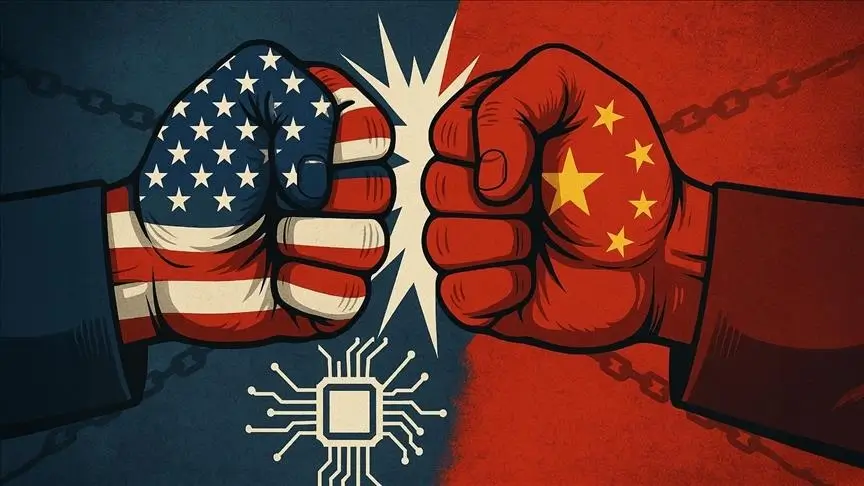
It helps explain why a dispute over computer chips, a naval patrol, or a diplomatic visit can suddenly dominate global headlines. At its heart, this conversation is about power and perception. For nearly eighty years, the United States has occupied the position of the world’s leading economic and military power. China, meanwhile, has risen faster than almost any country in modern history. Its economy, technology sector, and military capabilities have expanded dramatically in just a few decades. As China grows stronger, Washington worries about losing influence. At the same time, Beijing worries that the United States is trying to slow or contain its development. The Thucydides Trap is the framework many experts use to understand why this relationship feels tense even when neither side openly seeks confrontation.
When people refer to the Thucydides Trap in the context of U.S. China relations, they are describing a structural tension rather than a specific conflict. The idea suggests that the problem is not one policy disagreement or one territorial dispute. Instead, it is the broader dynamic of a rising power meeting an established one. China’s expanding global presence in trade, infrastructure investment, technology, and military reach challenges a system the United States has shaped since World War II. Each government insists it is acting defensively, yet each interprets the other’s actions as strategic pressure. That mutual suspicion causes even routine decisions to appear threatening. A tariff becomes economic warfare. A military exercise becomes intimidation. The Thucydides Trap helps explain why these reactions happen so quickly and why managing expectations matters as much as managing policies.
Table of Contents
What the Thucydides Trap Means
| Key Aspect | Explanation |
|---|---|
| Historical Origin | Ancient Greek historian Thucydides describing Sparta’s fear of Athens |
| Modern Interpretation | Used by contemporary political scientists to analyze great-power rivalry |
| Current Context | Applied to tensions between the United States and China |
| Major Flashpoints | Taiwan, South China Sea, trade competition, advanced technology |
| Primary Risk | Escalation caused by miscalculation or misunderstanding |
| Stabilizing Factors | Nuclear deterrence, global trade links, diplomacy |
| Strategic Purpose | Encourages policymakers to avoid accidental conflict |
The Thucydides Trap is not a prediction of war but a reminder about human behavior and fear in international politics. When power shifts, uncertainty rises. Nations react to protect themselves, yet those reactions can alarm others and create a cycle of mistrust. In the case of the United States and China, the concept helps explain why disagreements over trade, technology, or regional security quickly gain global attention. The challenge for both governments is to compete without allowing suspicion to dominate their decisions. History offers caution, not destiny. The choices leaders make how they communicate, negotiate, and manage crises will determine whether this rivalry becomes destructive or remains a stable competition. The outcome will shape not only bilateral relations but the international order of the twenty-first century.
Origins In Ancient Greece
- The Thucydides Trap comes from the writings of Thucydides, who chronicled the Peloponnesian War over two thousand years ago. He observed that Sparta, the dominant military power in Greece, became increasingly anxious as Athens grew wealthier and more influential. Athens developed strong naval capabilities and economic networks across the Mediterranean. Sparta began to see these developments not as progress but as a direct threat to its security.
- What makes the story important is that the war did not start because either side wanted destruction. Instead, suspicion grew over time. Alliances shifted. Political rhetoric hardened. Small crises were interpreted as deliberate provocations. Eventually, a series of events pushed both sides into a conflict neither had originally planned.
- Modern analysts see a familiar pattern. When countries feel insecure, they prepare for danger. But those preparations often alarm rivals, who respond with their own preparations. A cycle of fear replaces trust.
Why The Concept Applies to U.S. China Relations
- China’s transformation since the late twentieth century has been remarkable. Hundreds of millions of people moved out of poverty, industries expanded, and Chinese companies began competing internationally in electronics, infrastructure, and telecommunications. China now builds high-speed rail networks, invests in overseas ports, and develops advanced digital platforms. Its military modernization includes new naval vessels, missile systems, and cyber capabilities.
- For the United States, this development creates uncertainty. American influence has long rested on military alliances, technological leadership, and economic institutions. As China grows, American policymakers worry that global rules may shift in ways unfavorable to their interests.
- From China’s perspective, however, the situation looks different. Chinese leaders often argue they are not overthrowing a system but participating in it more fully. They see restrictions on technology exports, strengthened military alliances in Asia, and economic sanctions as attempts to slow their progress. This difference in perception fuels the tension described by the Thucydides Trap. Each side believes it is responding defensively, yet the other side reads the same action as aggressive.
Flashpoints That Increase Tension
Taiwan
- Taiwan is widely considered the most sensitive issue in the relationship. China views Taiwan as part of its territory and has consistently stated reunification is a long-term objective. The United States, while not formally recognizing Taiwan as an independent state, supports its security and maintains unofficial ties.
- Military aircraft patrols, naval movements, and political visits create frequent moments of tension around the island. Even a small misunderstanding could escalate rapidly because both sides see the issue as tied to national credibility. For China, it relates to sovereignty. For the United States, it relates to regional stability and alliance commitments.
The South China Sea
- Another area of concern is the South China Sea, a crucial shipping route for global trade. China has built artificial islands and installed military infrastructure in disputed waters. Neighboring countries challenge these claims, and the United States conducts operations to maintain freedom of navigation.
- Ships and aircraft from different nations often operate in close proximity. An accident such as a collision or misinterpreted maneuver could spark a crisis before diplomats have time to intervene.
Technology And Trade
- Competition now extends beyond territory. Advanced technology has become a central battleground. Semiconductor manufacturing, artificial intelligence, and telecommunications infrastructure are viewed as strategic assets. Governments increasingly restrict exports, screen investments, and impose sanctions.
- This economic rivalry feeds political mistrust. When economic policy becomes linked to national security, cooperation becomes harder, reinforcing the dynamics described by the Thucydides Trap.
Not Everyone Agrees
- Some scholars caution against assuming conflict is inevitable. They argue that the ancient Greek example cannot be applied directly to the modern world. Today, nuclear weapons make large-scale war extraordinarily dangerous. Leaders understand that a direct military confrontation would cause catastrophic losses on both sides.
- Economic interdependence also matters. The United States and China remain deeply connected through trade and global supply chains. Businesses, universities, and financial markets maintain relationships even during political disputes. These ties create incentives for stability.
- There is also a psychological concern. If policymakers believe a clash is unavoidable, they may take harder positions, increasing the risk of confrontation. In that sense, the idea itself can shape behavior.
Can The Trap Be Avoided?
- History shows that power transitions do not always lead to war. The United States overtook Britain economically in the early twentieth century without fighting it. Many experts believe a peaceful adjustment is still possible today.
- Avoiding escalation requires practical measures. Military communication channels can prevent accidents from spiraling into crises. Diplomatic meetings help leaders clarify intentions. Agreements on trade, climate, and global health build areas of cooperation even amid rivalry.
- The most important step is understanding how actions are perceived. A policy designed for domestic politics can appear threatening internationally. Recognizing this reality allows leaders to adjust their messaging and reduce misunderstandings.
What The Future Might Look Like
- The future relationship between the United States and China will likely be neither complete cooperation nor open hostility. Instead, it may resemble managed competition. Both countries will compete in technology, influence, and alliances while cooperating in areas where interests overlap.
- Climate change, financial stability, and pandemic response are examples where coordination benefits both nations. At the same time, rivalry will persist in advanced industries and regional security.
- The greatest danger remains accidental escalation. Many historical conflicts began with events no one expected a naval encounter, a mistaken assumption, or domestic political pressure. Preventing such moments requires consistent communication and restraint.
FAQs on What the Thucydides Trap Means
What Is the Thucydides Trap?
It is a theory that conflict becomes more likely when a rising power threatens to replace an established power, creating fear and mistrust between them.
Why Is the United States Concerned About China’s Rise?
American policymakers worry about losing strategic influence, technological leadership, and the ability to shape global rules.
Why Is Taiwan Central to the Tension?
Both countries view Taiwan as strategically and politically important, and actions around the island are closely watched by each side.
Does The Thucydides Trap Mean War Is Inevitable?
No. The concept serves as a warning, encouraging diplomacy and communication to prevent escalation.