
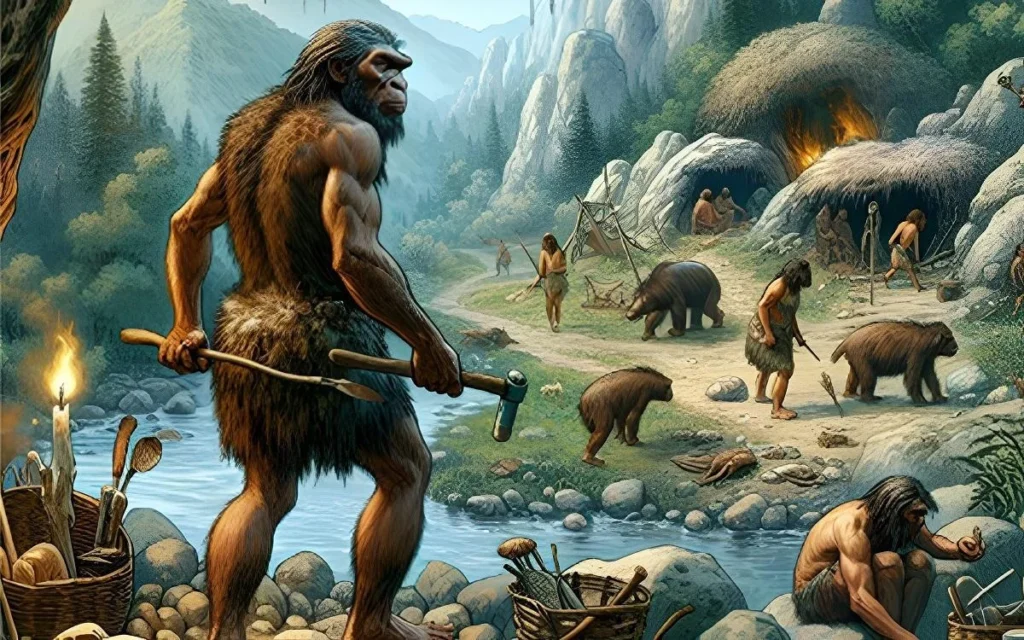
A growing number of scientists say AI Reconstructions — the gap between AI-generated Neanderthal images and archaeological evidence — reveals more about modern culture than prehistoric humans. Studies published in 2025 and 2026 found that artificial intelligence systems repeatedly portray Neanderthals using outdated stereotypes, despite decades of new fossil, genetic, and behavioral research.
Table of Contents
Why AI Reconstructions of Neanderthals Still Don’t Match Archaeology
| Key Fact | Detail |
|---|---|
| AI images outdated | Closely match early 20th-century reconstructions |
| Modern view | Neanderthals were cognitively and socially complex |
| Root cause | Training data dominated by public imagery, not journals |
Researchers say improving datasets, not just algorithms, may be the key solution. As AI becomes integrated into classrooms and media, scientists emphasize careful verification. “Technology is powerful,” Wilkinson said, “but accuracy still depends on human knowledge guiding it.”
Understanding AI Reconstructions
Researchers analyzing large language and image-generation systems found a consistent pattern: artificial intelligence tends to portray Neanderthals as primitive, hunched, and ape-like.
However, archaeological evidence tells a different story.
“Modern reconstructions show Neanderthals stood upright and looked recognizably human,” said Dr. Emma Pomeroy, a paleoanthropologist at the University of Cambridge, in public commentary accompanying recent research findings. “The brute caricature belongs to early anthropology, not current science.”
The mismatch is what scientists now call the problem of AI Reconstructions.
Recent testing also showed that when users provided neutral prompts such as “prehistoric human family,” AI models frequently still generated stereotypical caveman scenes — including clubs, animal skins, and exaggerated body hair. Researchers say that indicates the system is relying on learned associations rather than scientific knowledge.
How AI Learned the Wrong Neanderthal (AI bias in training data)
Artificial intelligence models do not study fossils. They learn patterns from enormous collections of online text, photographs, and artwork.
The problem, researchers say, is that the internet contains far more outdated information than current scientific literature.
Many peer-reviewed archaeological papers remain behind academic paywalls. By contrast, older museum artwork, textbooks, children’s books, and films are widely available and heavily indexed. As a result, AI training datasets over-represent obsolete ideas.
“AI reproduces the most common representation, not the most accurate one,” said digital humanities researcher Dr. Michael Rivera. “And for Neanderthals, the most common representation is historically wrong.”
The Role of Popular Media
Films and television played a major role in shaping datasets. Throughout the 20th century, documentaries and movies portrayed Neanderthals as unintelligent cavemen. These depictions became embedded in educational posters and encyclopedias, which were later digitized.
Once included in training datasets, they became statistical patterns.
In effect, AI did not learn from science. It learned from culture.
Archaeology’s Modern View of Neanderthals (Neanderthal behavior)
Over the past 30 years, discoveries have transformed scientific understanding.
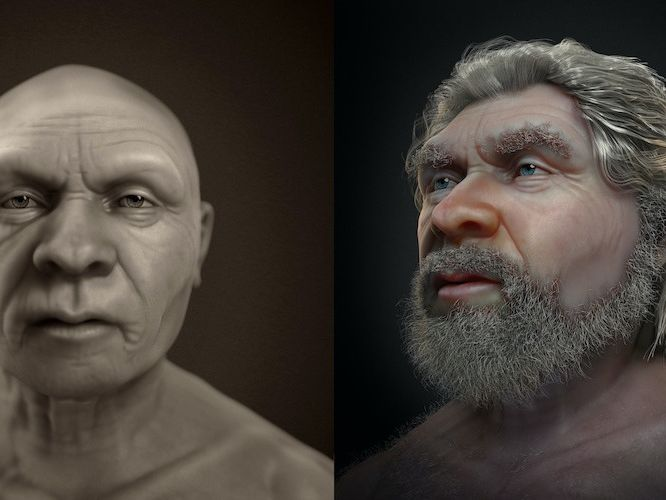
Archaeologists now agree Neanderthals:
- made adhesives from birch tar
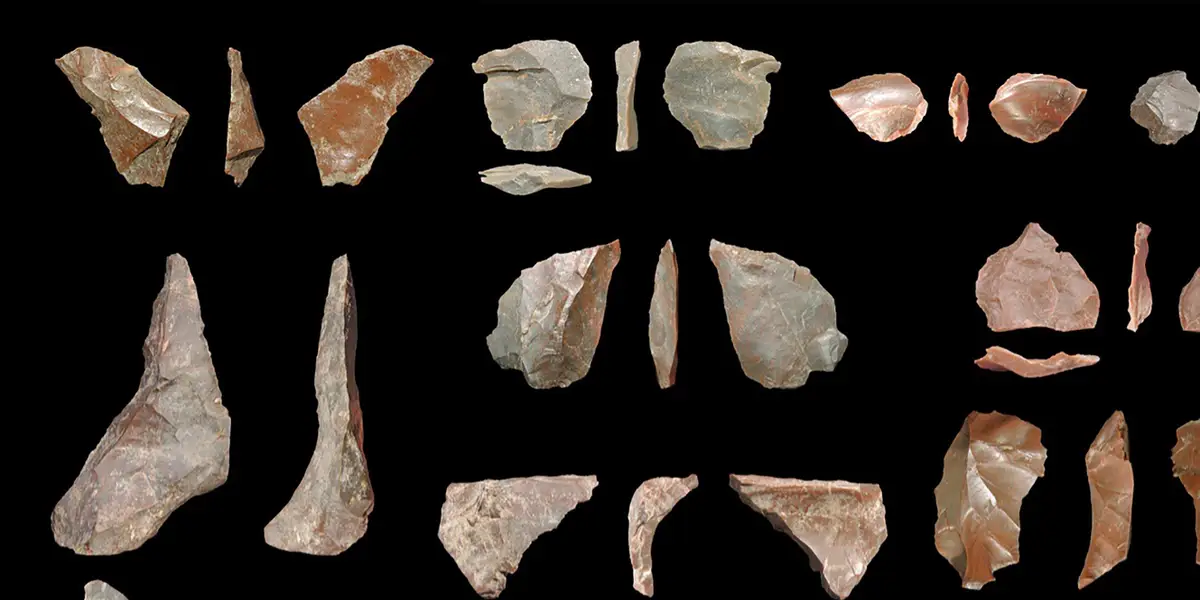
- crafted specialized stone tools
- used pigments and ornaments
- cared for injured group members
- buried their dead
Evidence from Shanidar Cave in Iraq revealed individuals with severe injuries survived for years, suggesting community care. Some researchers interpret pollen deposits at burial sites as possible ritual behavior, although debate continues.
According to research summarized by the Smithsonian Institution’s Human Origins Program, these behaviors indicate planning ability, cooperation, and cultural traditions.
Genetic evidence has also shown Neanderthals interbred with modern humans. Today, many living people outside Africa carry about 1–2% Neanderthal DNA.
“They were not a failed evolutionary experiment,” said evolutionary biologist Svante Pääbo, whose work on ancient DNA earned the 2022 Nobel Prize in Physiology or Medicine. “They were another form of human.”
Language and Communication
Another area of active research involves speech capability. A Neanderthal hyoid bone discovered in Israel closely resembles that of modern humans. Computer modeling of their ear structure suggests they could hear speech frequencies similar to ours.
While researchers cannot prove Neanderthals had modern language, many now believe they possessed complex communication.
Why Fossils Leave Room for Interpretation (forensic facial reconstruction)
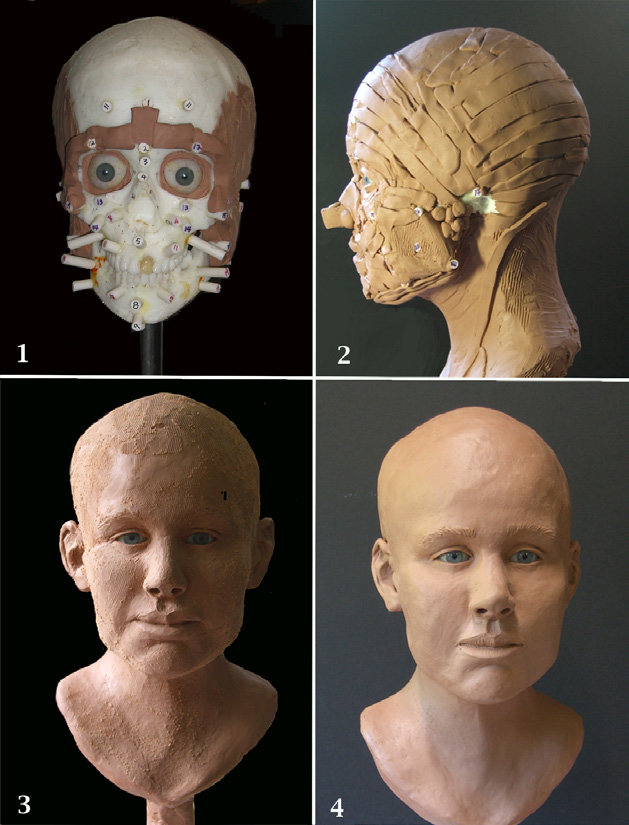
Even archaeologists cannot fully reconstruct a face from bones alone.
Fossils preserve hard tissue such as skull shape and teeth, but not soft tissue. Missing features include:
- lips
- nose cartilage
- ears
- skin texture
- hair
Forensic reconstruction uses average tissue thickness markers derived from modern populations. Scientists then estimate features using comparative anatomy.
Small changes in assumptions can produce dramatically different appearances. AI systems fill those gaps automatically — often by copying familiar patterns.
“AI is completing a picture,” said forensic anthropologist Dr. Caroline Wilkinson, a specialist in facial reconstruction. “But it is completing it using cultural memory rather than biological evidence.”
The Nose Problem
One particularly difficult feature is the Neanderthal nose. Their skulls suggest a wide nasal opening adapted to cold climates. However, bone does not reveal the external shape. As a result, reconstructions vary significantly, giving AI large interpretive freedom.
The Cultural Feedback Loop
Researchers say AI Reconstructions reflect a broader technological issue.
Artificial intelligence does not evaluate truth. It predicts probability.
If historical art, cartoons, and documentaries depict Neanderthals as primitive cavemen, the algorithm concludes that is the correct answer. The model then generates new images reinforcing the same myth.
This creates a feedback loop:
- Humans create inaccurate depictions.
- AI learns those depictions.
- AI outputs them as fact.
- The public accepts them as scientific.
The concern among educators is that AI images may now replace textbook illustrations, spreading inaccuracies faster than earlier media ever could.
Why This Matters Beyond Anthropology
Experts warn the issue extends far beyond prehistoric humans.
The same mechanism may affect:
- historical figures
- extinct animals
- early civilizations
- medical summaries
- educational materials
“Generative AI is not a library,” said technology ethicist Dr. Lisa Nakamura. “It is a mirror of what society has published — including its mistakes.”
Scholars say this creates a new challenge: digital misinformation that is unintentional but persuasive because it looks authoritative.
Educational and Museum Responses
Museums are now responding. Several natural history institutions have begun labeling AI-generated images and clarifying which reconstructions are evidence-based.
Some organizations are also collaborating with computer scientists to build curated training datasets consisting only of peer-reviewed scientific material.
Educators are developing guidelines advising teachers to verify AI-generated historical content. Universities increasingly require students to cite scientific sources rather than AI illustrations.
Ongoing Research
Several research groups are now working with museums and academic publishers to provide verified datasets for machine learning systems.
Scientists hope curated scientific training material could reduce AI Reconstructions errors and improve public understanding.
Researchers are also experimenting with “evidence-constrained AI,” a method that forces image generators to follow anatomical measurements derived directly from fossils.
“AI will become a major educational tool,” Pomeroy said. “We need it to reflect science, not century-old misconceptions.”
FAQs About Why AI Reconstructions of Neanderthals Still Don’t Match Archaeology
Why do AI images show Neanderthals as cavemen?
Because AI models learned from public imagery and cultural depictions, many of which were created before modern archaeological discoveries.
Did Neanderthals look like modern humans?
They had distinctive features such as strong brow ridges and robust builds but would still appear recognizably human.
Are AI Reconstructions scientifically reliable?
They are illustrative but should not be treated as archaeological evidence.
Will AI improve?
Researchers say accuracy will improve if training data is curated using verified scientific sources.